Maker Applications Open for From Sheep to Shawl

Calling all artists, crafters, and designers!

Apply to be a From Sheep to Shawl Maker!

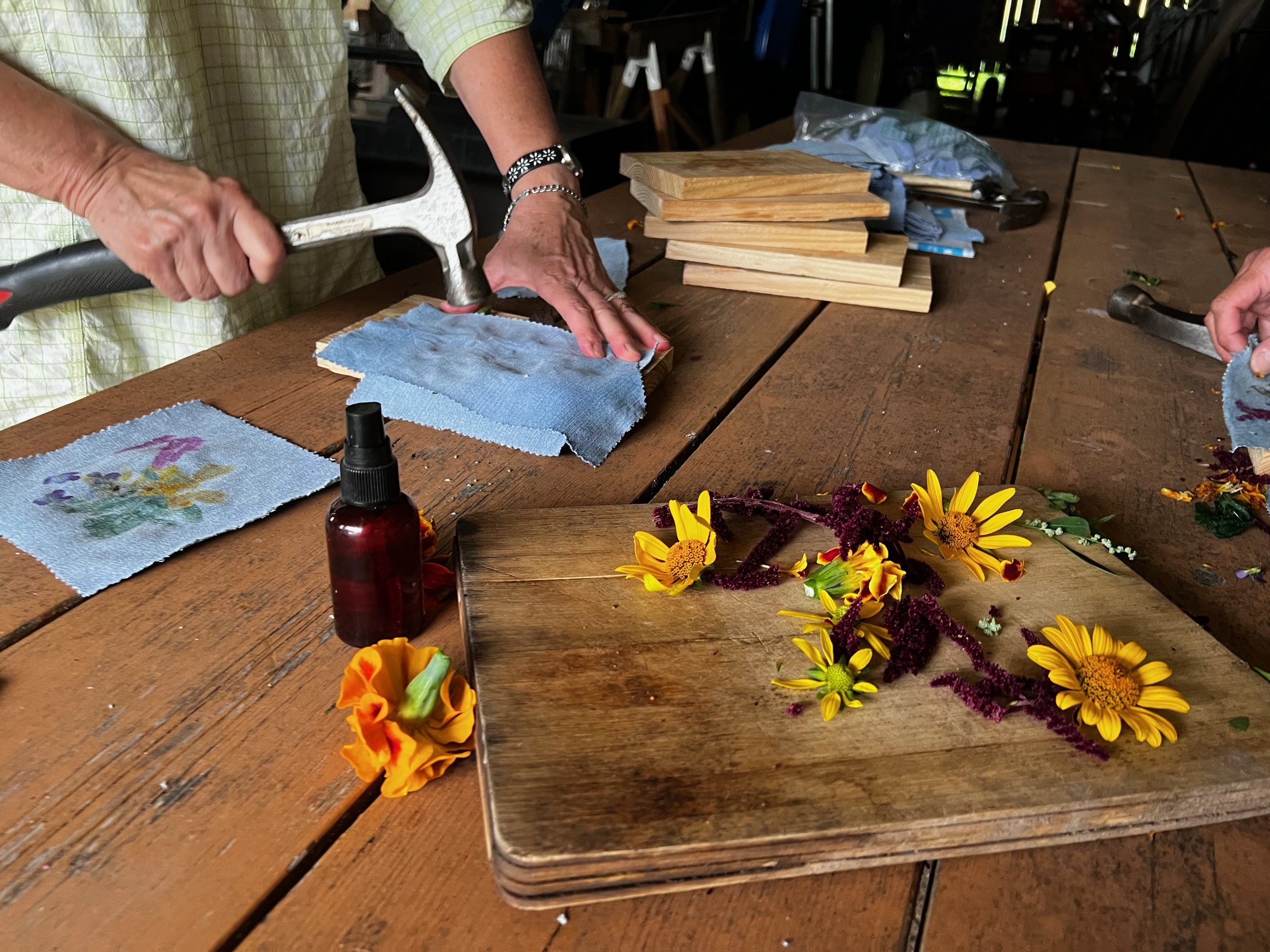
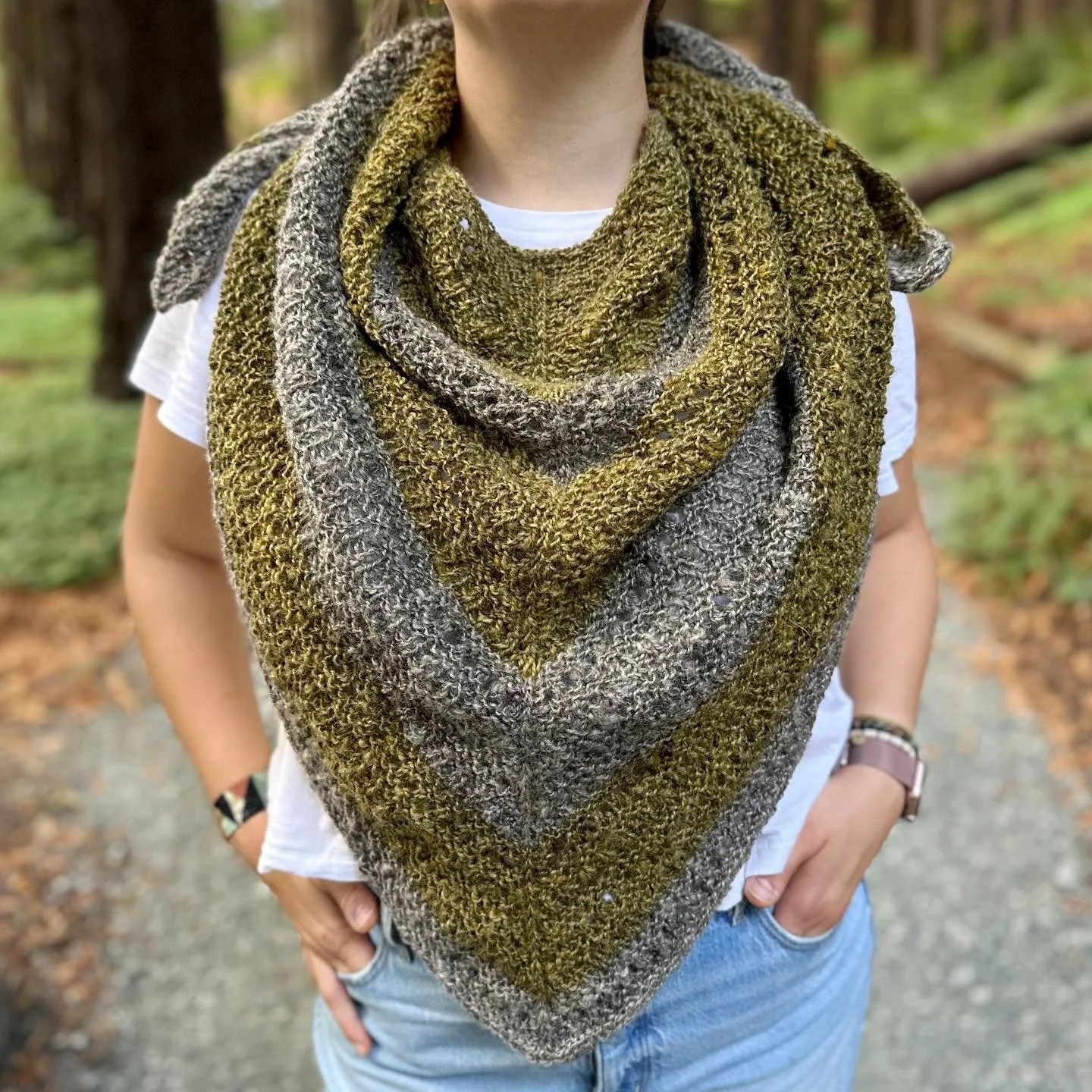
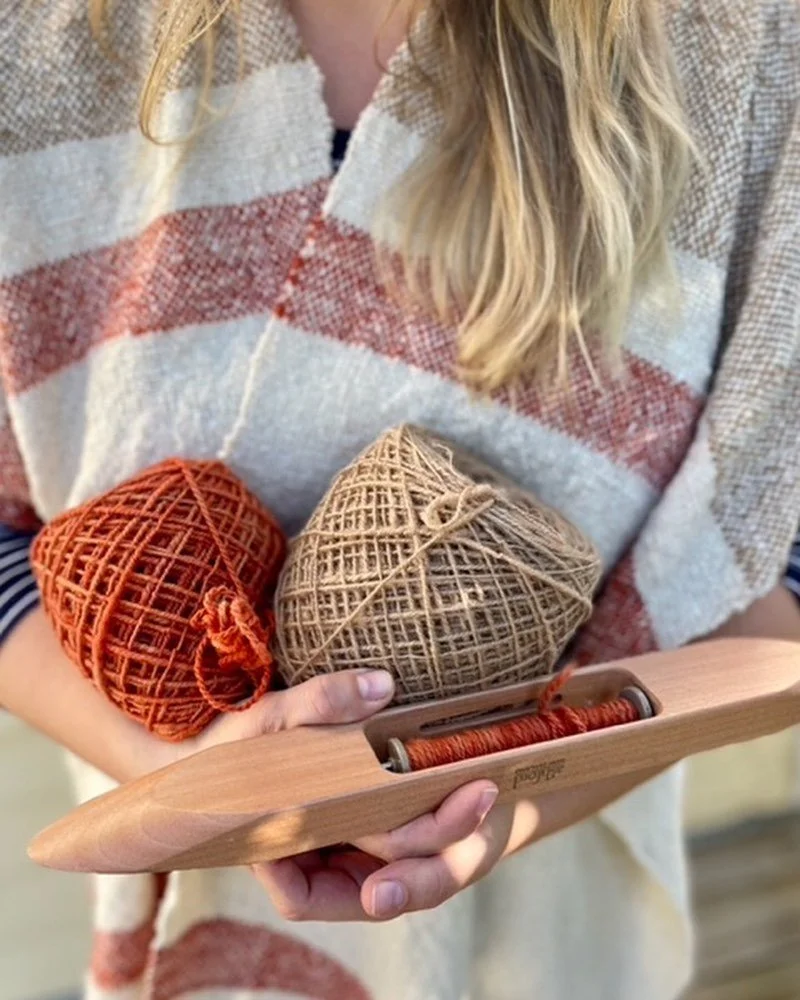
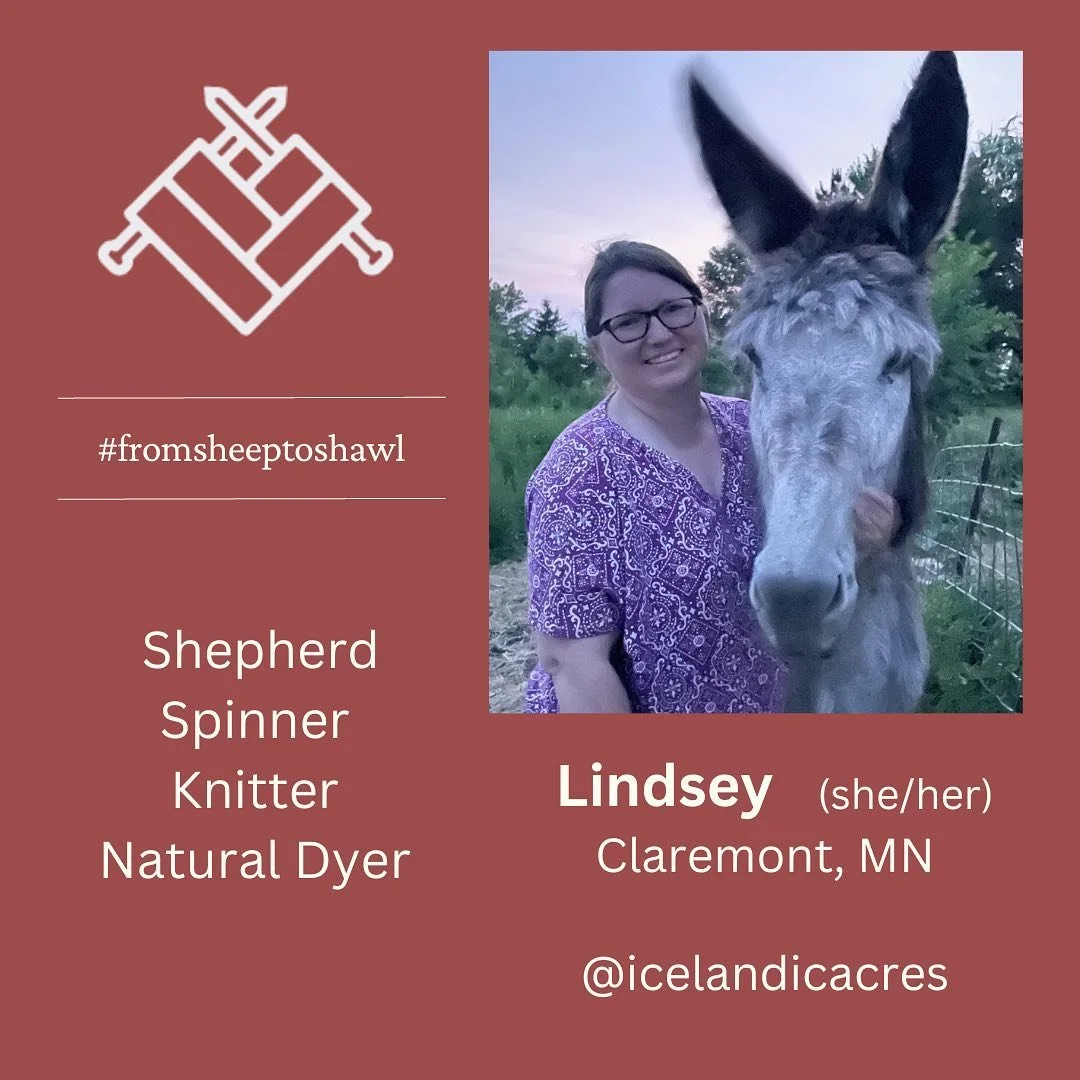
In 2023 Three Rivers Fibershed is focusing programming around the concept of From Sheep to Shawl. The programming aims to engage community members in exploring the lifecycle of textiles by creating a shawl made entirely with local fiber, local natural dyes, and local labor.

To enhance community engagement in the programming, TRF is looking for 3 Makers who will commit to making a shawl entirely with local fiber, dyes, and labor in 2023; documenting their project along the way; and sharing it with the wider TRF community.

Makers will be compensated with a $250 stipend. Makers must provide their own supplies, but mutual aid funding is available to assist with the purchase of local fiber or dye products for the project.

Makers will commit to:

  • Making a shawl completely from local fiber, local dyes, & local labor by October 2023. Fiber and natural dyes must be sourced from TRF Stewards.

  • Documenting the process through photos and video & sharing these on individual social media accounts, tagging Three Rivers Fibershed.

  • Completing a set of survey questions each season (June, August, October) to answer brief questions about how the process is going & provide a few photos.

  • Attend at least one virtual or in-person event to speak about their project

  • Promote From Sheep to Shawl programming throughout the year within their community.

TRF will review all applications and select Makers with the aim of diversity based on shawl type, experience level, techniques used (spinning, natural dyeing, weaving, knitting, crochet, etc.), and location within TRF's strategic geography. We hope the Makers will, as a group, represent a diverse range of skills, techniques, and experience.

Application will remain open through May 17th.
Selected Makers will be notified via email by May 31st.

Apply Here

Wool Growers Cooperative Closure & the Impact on our Fibershed

By: Theresa Bentz, Get Bentz Farm & Badgerface Fiber Mill

β€œThere is just no money in wool anymore, might as well sell off the flock and get hair sheep.

It’s not even worth taking to the broker, the burlap sack and the price of gas has more value than the wool.”
— Anonymous shearer during 2022 wool shearing in South East MN

The American wool industry has been on a slow decline since the 1990’s when polar fleece and synthetic outerwear became ultra popular. It hit an all time low during the COVID-19 pandemic.  Shepherds could expect pennies to the pound for their fleece, often costing more to shear the animal than the value of the fleece. Many shepherds in the tri-state area (MN, WI, IA) focus their flocks and production on lamb meat, which has increased in value thanks to immigrant communities who eat more lamb than the typical American household. This increased market for lamb meat has drawn the focus away from wool production, fine fleece, or VM minimal fleece. The focus is instead on raising large lambs that grow fast and bring a good price on the larger market. But the wool is not worthless.

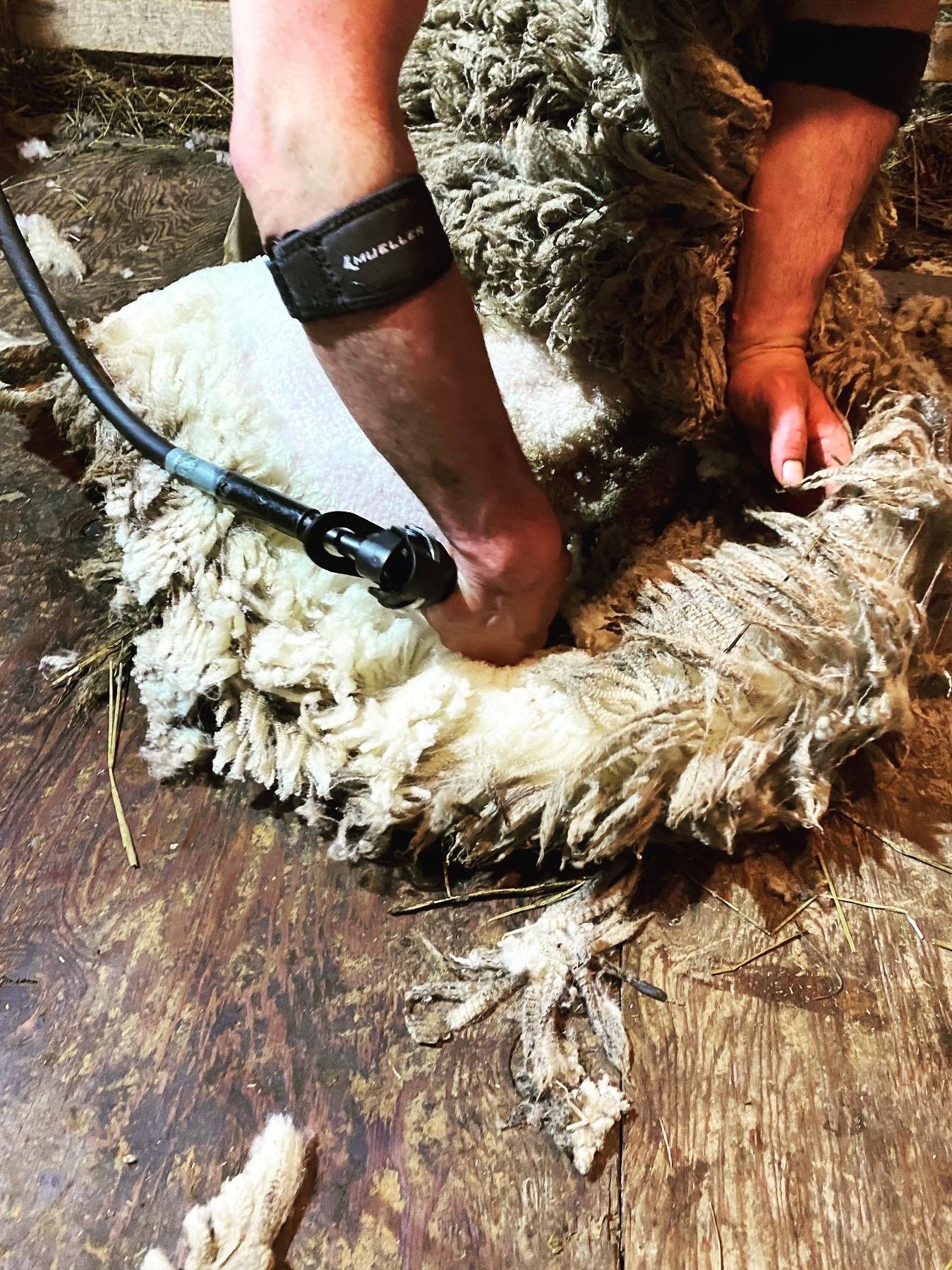
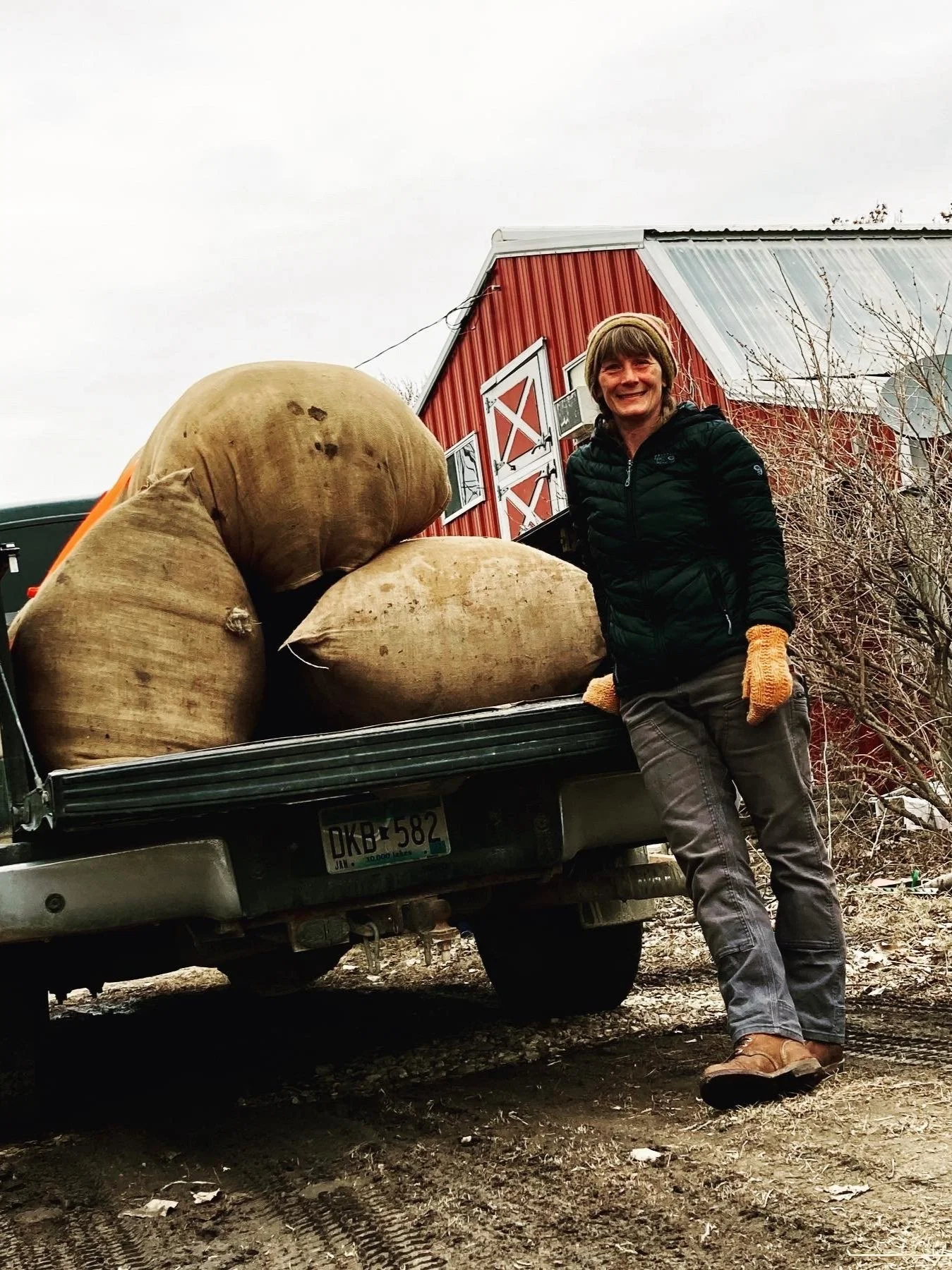
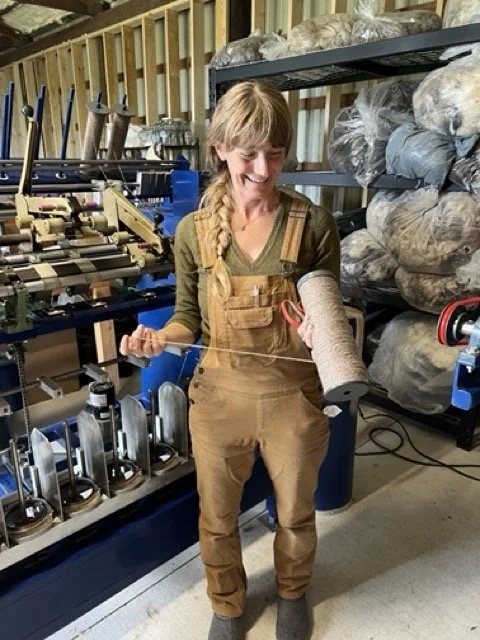
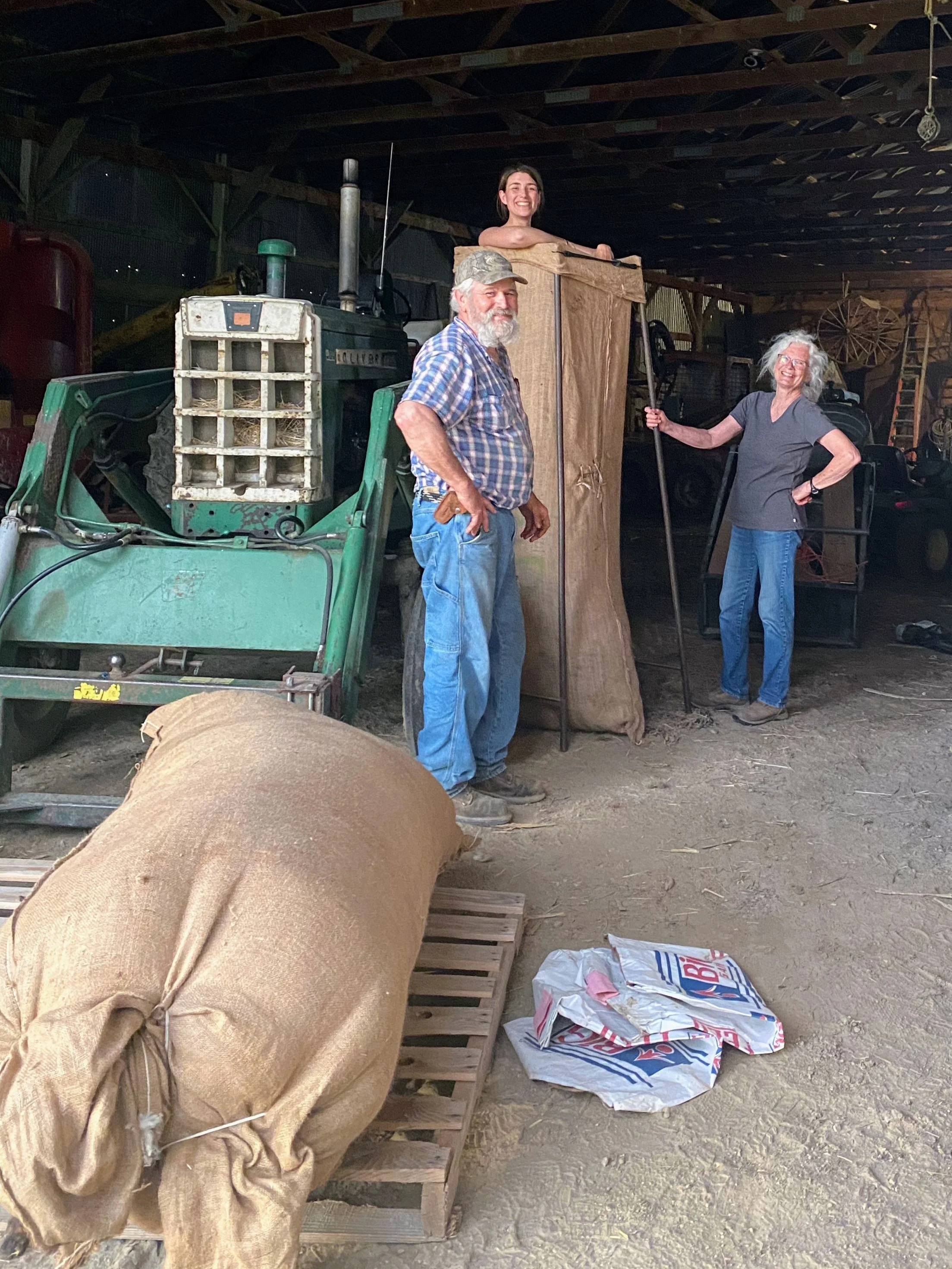
In 2021 I went out on a limb and purchased a cottage industry mill to process my own fiber and the fiber of others in the area. I quickly realized that I needed to find more fleece, and lots of it, to keep up with demand for roving and rug yarn (at the time I was not yet making yarn).  I connected with my shearer friends who helped me source bales of wool and I would pay them 2x what the market value for the wool, which made everyone quite happy.  A bale of wool is a large burlap sack stuffed with compressed wool that weighs about 250-500 lbs.  I found that if I went to the shearing I could quickly skirt the wool (remove debris and damaged wool from the fleece) before it made it into the bale. This way, I would save myself time later by picking out the specific fleeces I wanted. This was also a great way to get to know my local fiber community, spend time outside, chat with shearers and shepherds, and get real dirty.  

In the late part of 2022, just as I was getting ready to think about what types of wool I wanted to use for my mill, I heard rumors of Mid-State Wool Growers Coop closing.  Shearers were concerned that they would have a harder time selling the wool after shearing, and that the shepherds would be hit hard.  I wondered why the market was falling apart, and how we can show the value of all wool types, not just the next-to-skin fine fiber that most consumers fixate on. I also wondered what I could do with my limited resources.  

β€œIt’s got to be able to go against the skin,” Rowe said, for farmers to get a good and fair price for their wool. β€œThe comfort factor with coarse wool is nowhere near what is deemed acceptable, or even excellent.” (Wagoner, 202

Why is fine wool the only wool that has value on the larger market?  Yes, fine wool like Rambouillet and Merino is absolutely lovely. It is soft and buttery, and yes, it lacks the itch factor. But do we need it for everything?  How many of us wear a shirt under our woolen sweaters?  And why do we need super soft wool on our feet, which are designed to endure rough terrain and textures? And what about the washability of wool? Is there a wool type that can be washed and won’t shrink in the washer that could replace superwash (a wool type that is treated to be resistant to felting, the production of which uses harsh chemicals and large quantities of water)?  

These were all questions I had when hearing about the closure of the cooperative. Meeting with shepherds in my area, I put my focus into answering them. 

Fine wool is the only wool on the market that has any value because the value is placed in consumer demand - driven largely by marketing. We are told that wool is itchy, that it is hard to wash and will shrink. As a result, consumers demand a soft, washable wool and the market creates superwash merino to meet that demand. Perhaps our focus should be in educating consumers about the environmental impact of superwash and about qualities of other types of wool to help dispel the myths we have been told.  

People are always amazed when I tell them that I can wash my down wool socks or mittens in the washer on the regular cycle because the structure of the fiber is resistant to felting. Or that my hat made of Cheviot wool never felts, doesn’t itch or pill, and holds the stitch definition perfectly.  As a shepherd, I love my Suffolk sweater and Cheviot mitts because I can wash them on hot after they become soiled, and the hay doesn’t stick to them!  If more consumers knew that the wool the current market deems as having absolutely no value can be washed over and over again, do you think they would want it and thus give it value?  I believe so.  

As a fibershed I believe the closure of the cooperative gives us an opportunity to advocate and educate the public about all the different types of fiber in our communities and their value.  Not every shepherd will want to market their fiber item, and that is okay. The niche market, where many small shepherds find their market for their wool, isn’t sustainable.  Niche markets come and go with the changing seasons. What is hot today might be gone tomorrow. We need security. 

With this closure we shouldn’t put the weight of this on the shoulders of the shepherds, but rather increase education and advocacy about all wool and fiber types and how the market has failed not only the consumer but also the producer. Because at the end of the day, if wool has no value in the larger market how can we ever expect it to have a value in the niche market?  

Learn more about Get Bentz Farm & Badgerface Fiber Mill at https://www.getbentzfarm.com/ 

To learn about breeds and fiber types available within the Three Rivers Fibershed, check out the Regional Fiber Sourcebook and learn more about the Stewards creating local fiber with the Steward Directory.


Final Report: 2022 Farm & Fiber Tour

2022 Farm & Fiber Tour

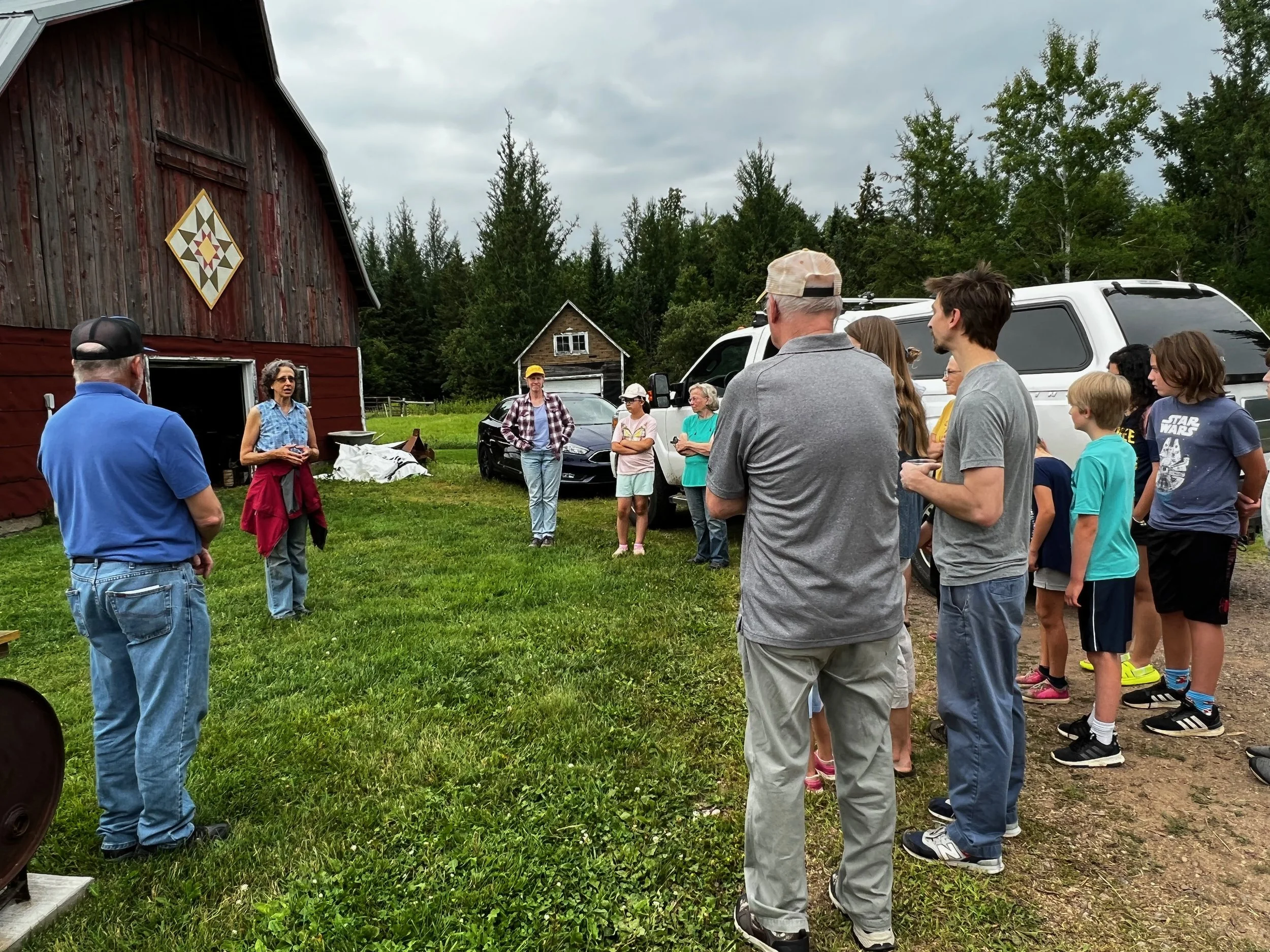
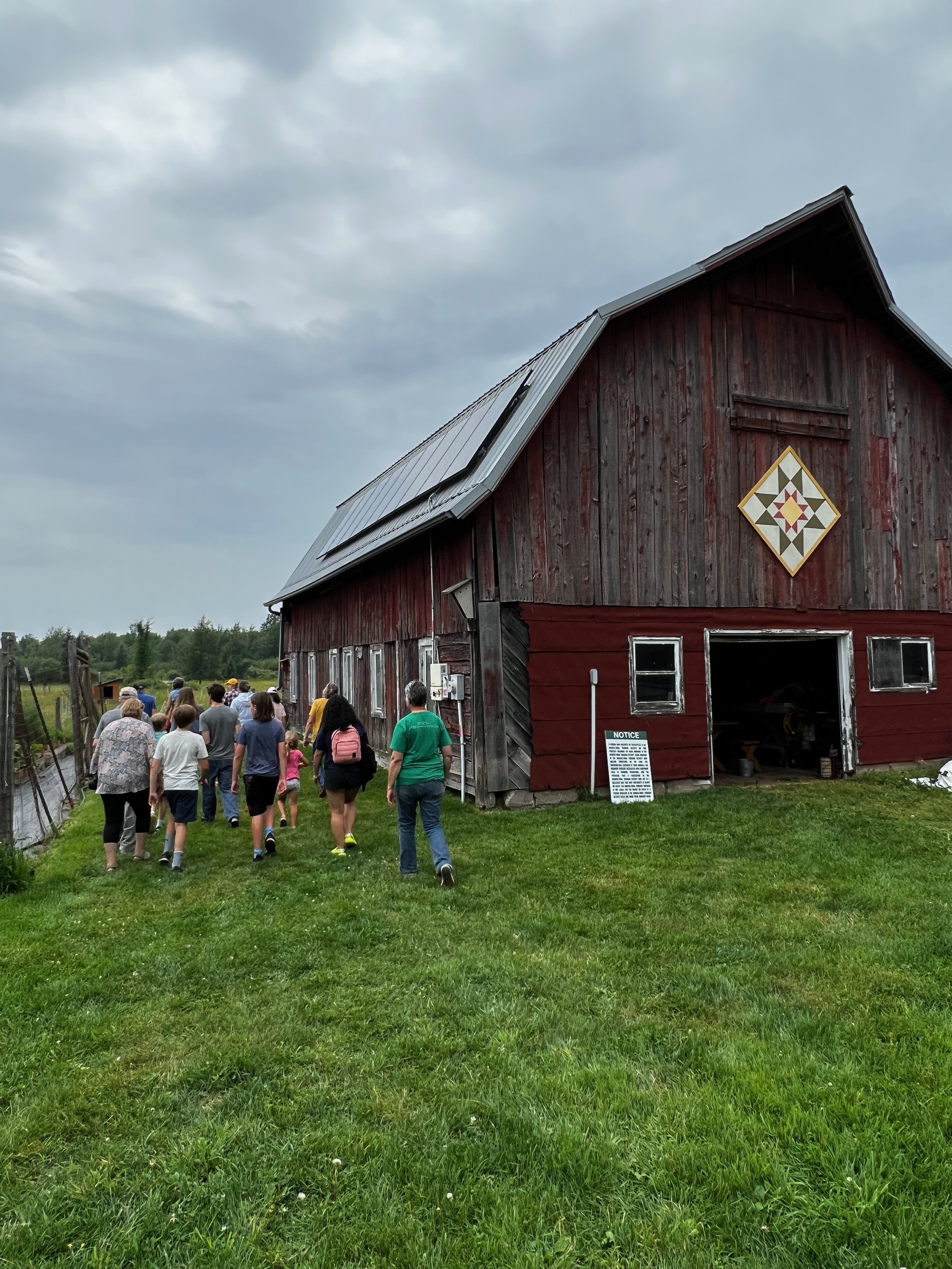
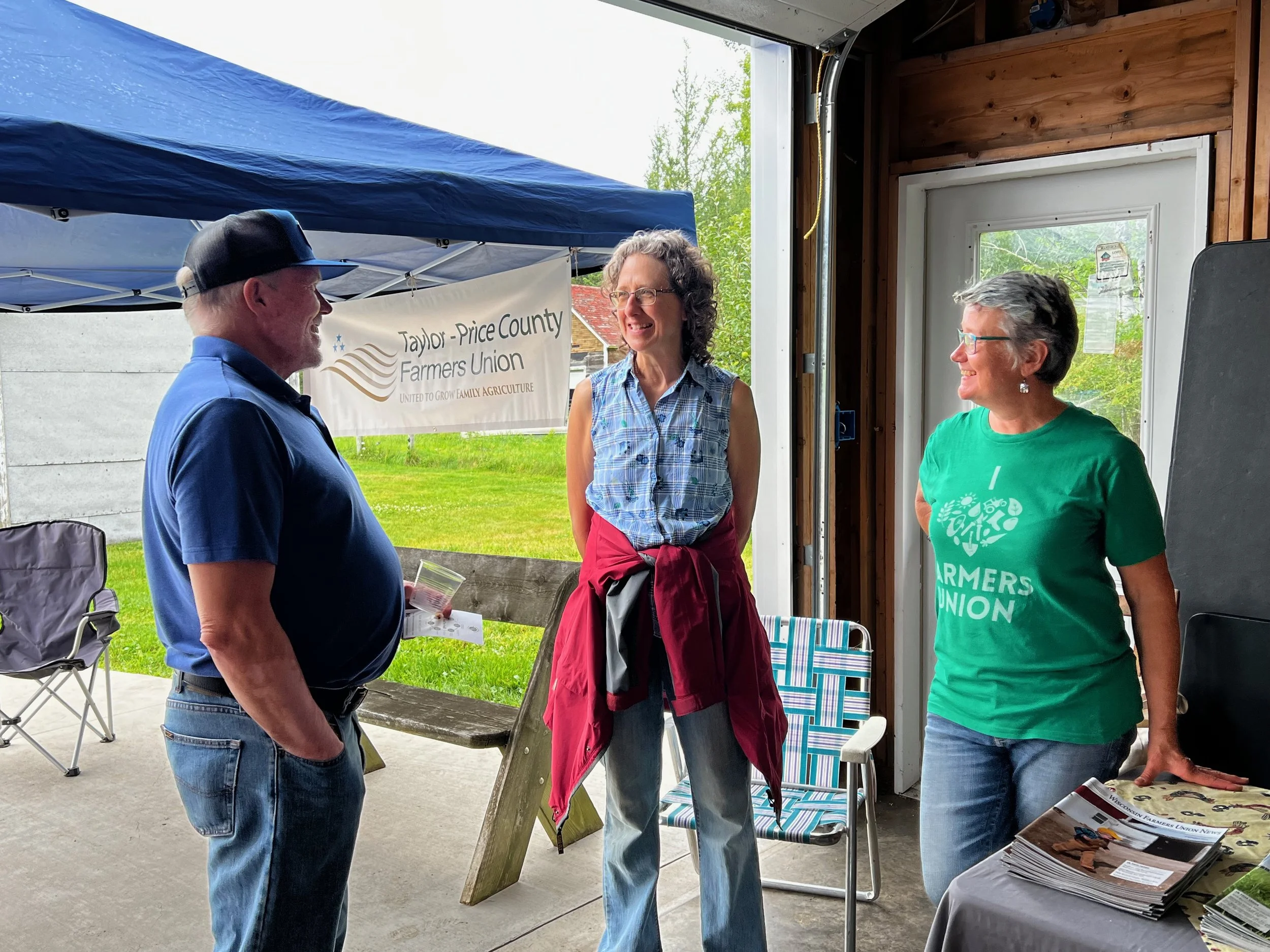
The 2022 Farm & Fiber Tour was a collaboration between Three Rivers Fibershed (TRF) and Wisconsin Farmers Union (WFU) funded through the WFU Local Initiative Grant Program. Three shepherds, members of both WFU and TRF, hosted on-site events during August & September to engage community members in learning about local fiber systems and soil-to-soil agricultural practices.

Thank you to everyone who attended and helped with these events!

Special thanks to:

  • Hosts Autumn Larch Farm, Curlee Acres, and Priory Farm

  • Photographers Danielle Endvick, Connor Nelson, and Kathleen Melin

  • WFU & TRF staff, volunteers, and fiber demonstrators

Read the final report

How Do Your Socks Relate to Climate Change?

Programming for our Soil to Sock Challenge wrapped up this past fall, but we are still thinking and talking about how one of your most common garments - Socks - relate to soil-to-soil, climate beneficial agriculture and textile systems! Three Rivers Fibershed president, Maddy Bartsch, was a guest speaker at the January meeting of the Central Minnesota chapter of The Climate Reality Project to discuss the important work of regional fiber and textile systems.

Watch the presentation

How Do Your Socks Relate to Climate Change?

Perhaps you're wondering what socks have to do with climate change, well, it turns out quite a lot! With the recent completion of the Three Rivers Fibershed's (TRF) Soil to Sock Challenge, Maddy Bartsch of TRF walks us through how the textiles we wear (yes, even your socks) intersect with a number of issues that contribute to climate change. Grab your favorite pair of socks and learn about how your socks can be a part of one solution to climate change. 

​

About the Speaker: Maddy Bartsch (they/she) is a farmer, educator and organizer of decentralized textile economies based in Minneapolis. Maddy has helped a broad range of clients navigate local textile economies through projects like the Minnesota Hemp Wool Project, the TRF Regional Fiber Sourcebook, the National Mill Inventory Survey, and as a Yarn Incubator for Fibershed. In addition to fiber systems, Maddy’s work includes tackling food systems as the Community Connector for the Cannon River chapter of the Sustainable Farming Association. More recently, Maddy received a Farmer-Rancher SARE grant which has enabled them to focus on 2 years of research around building a natural dye cooperative in the Midwest. Maddy speaks on the topic of local fiber systems and sustainable textiles and teaches fiber arts classes to learners of all ages throughout the Midwest. 

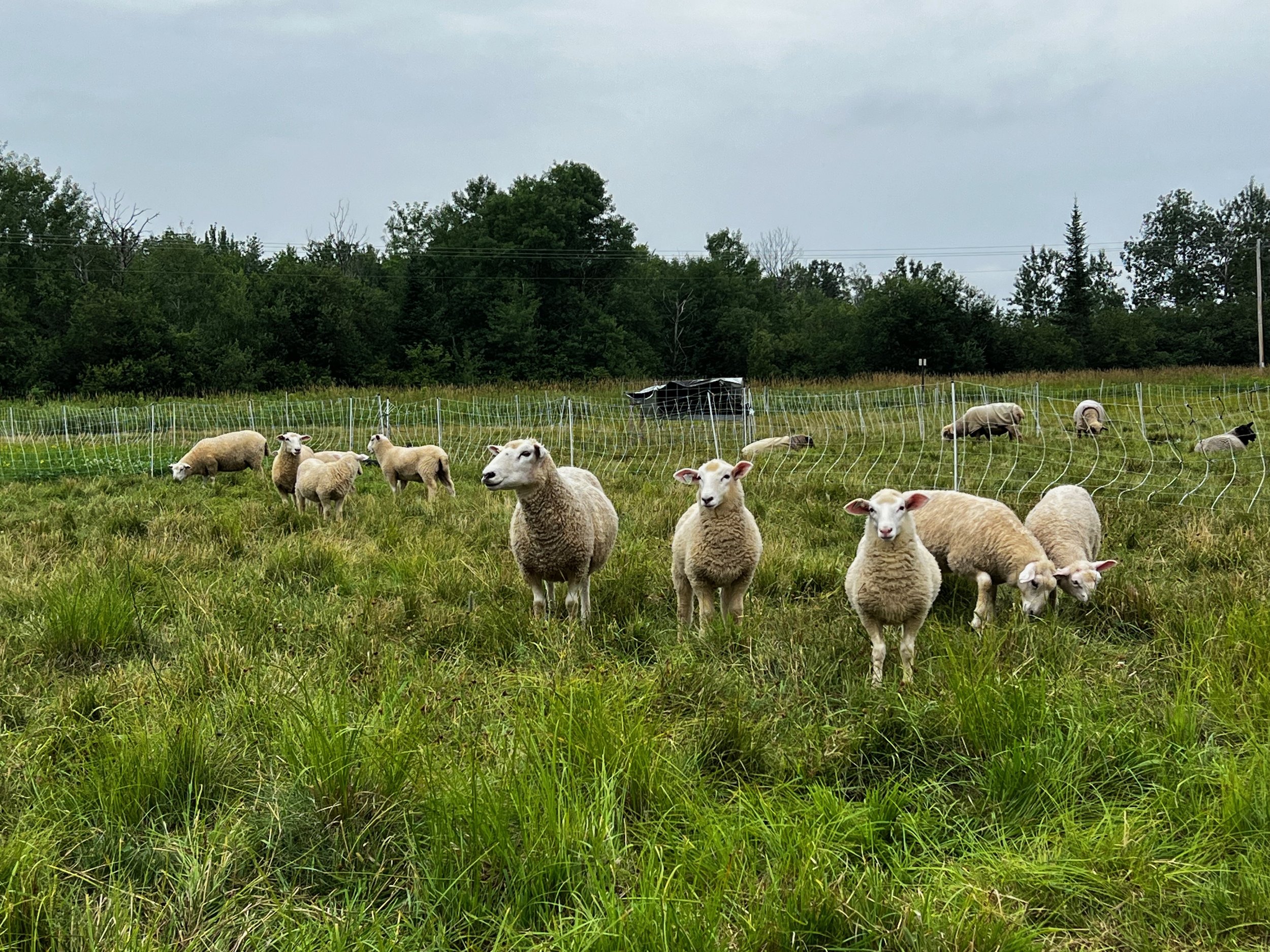
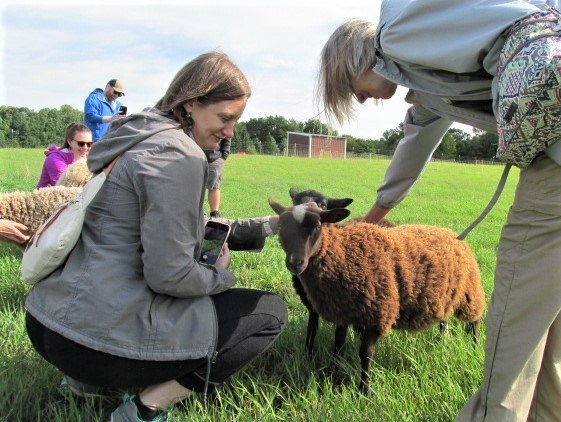
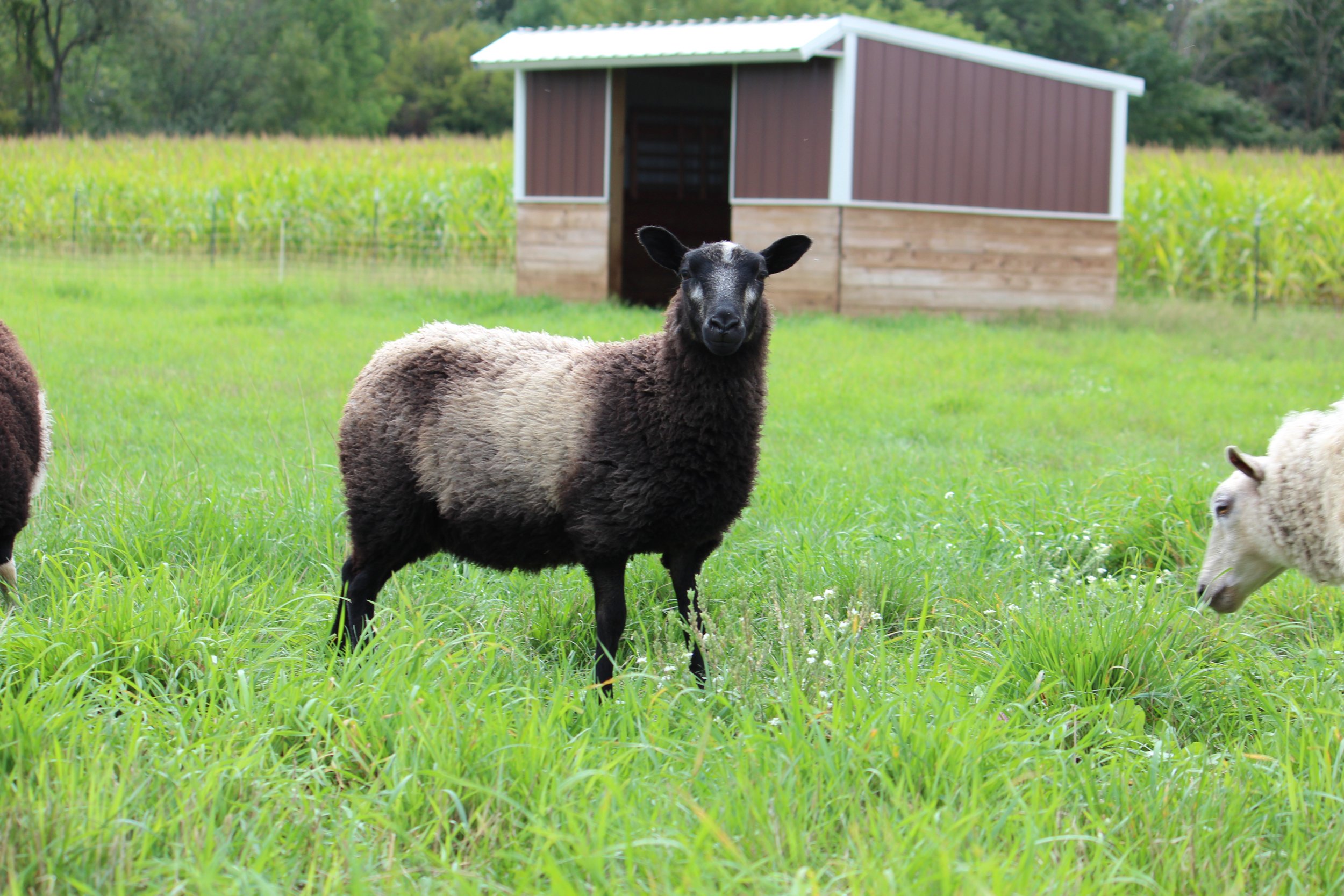
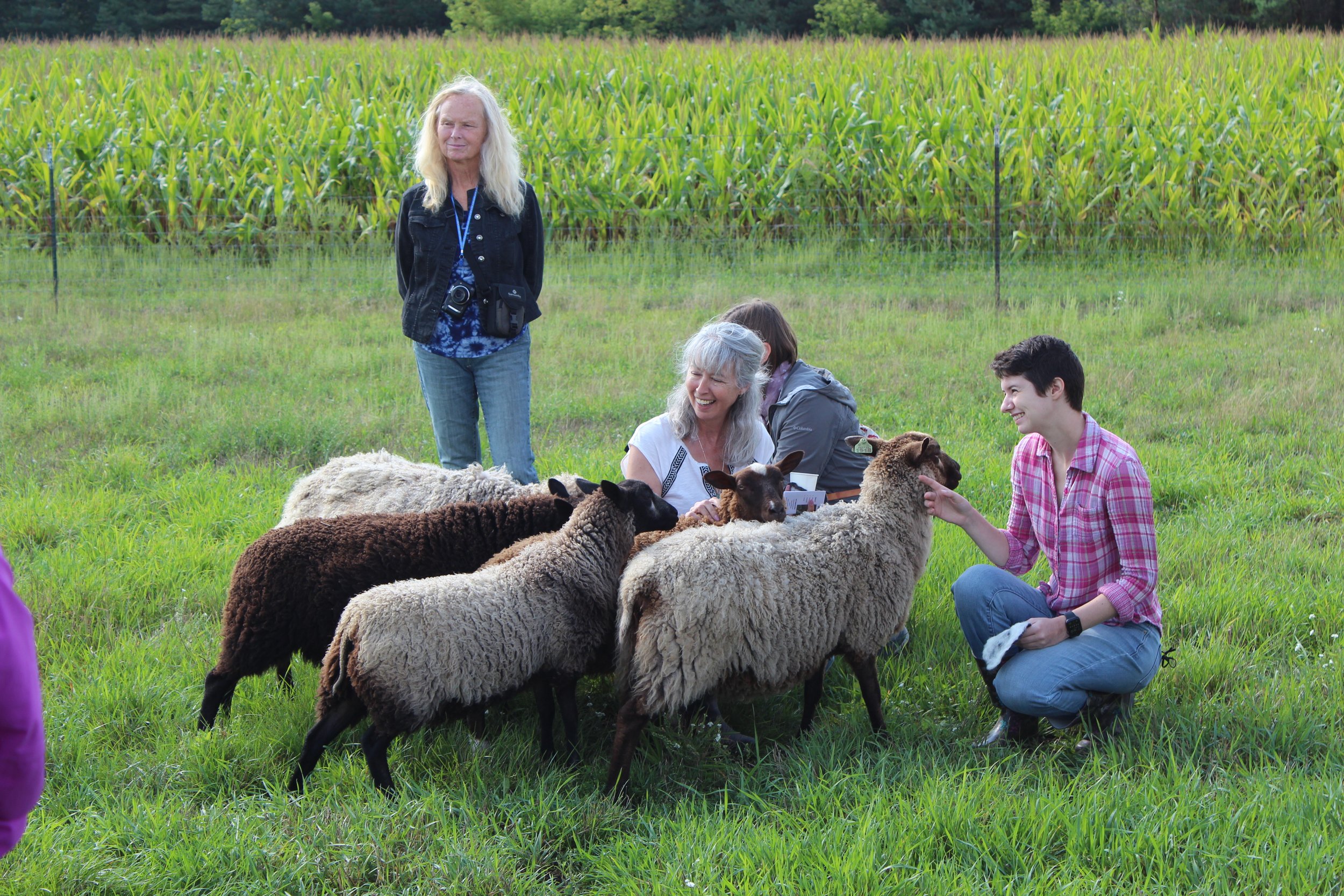
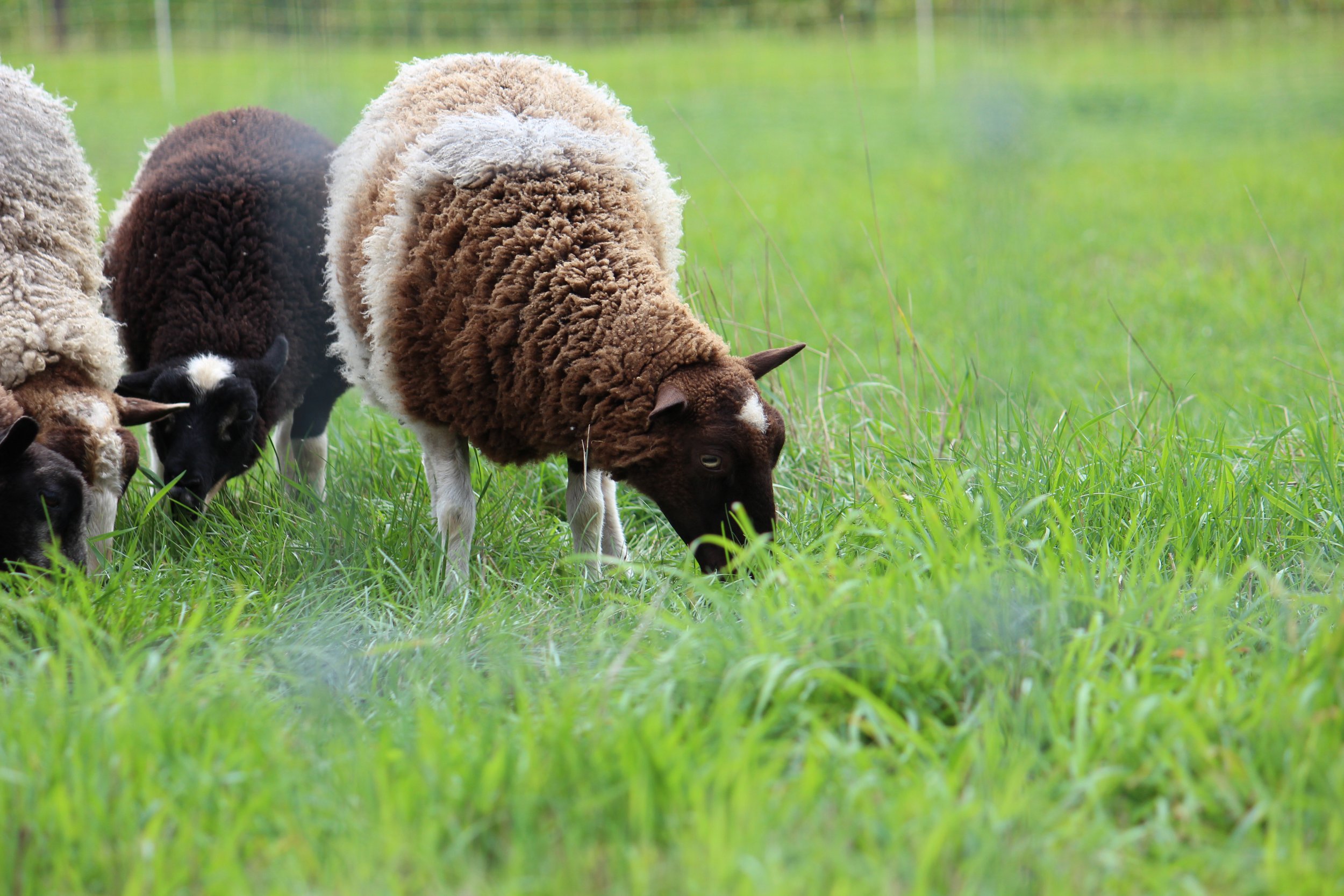
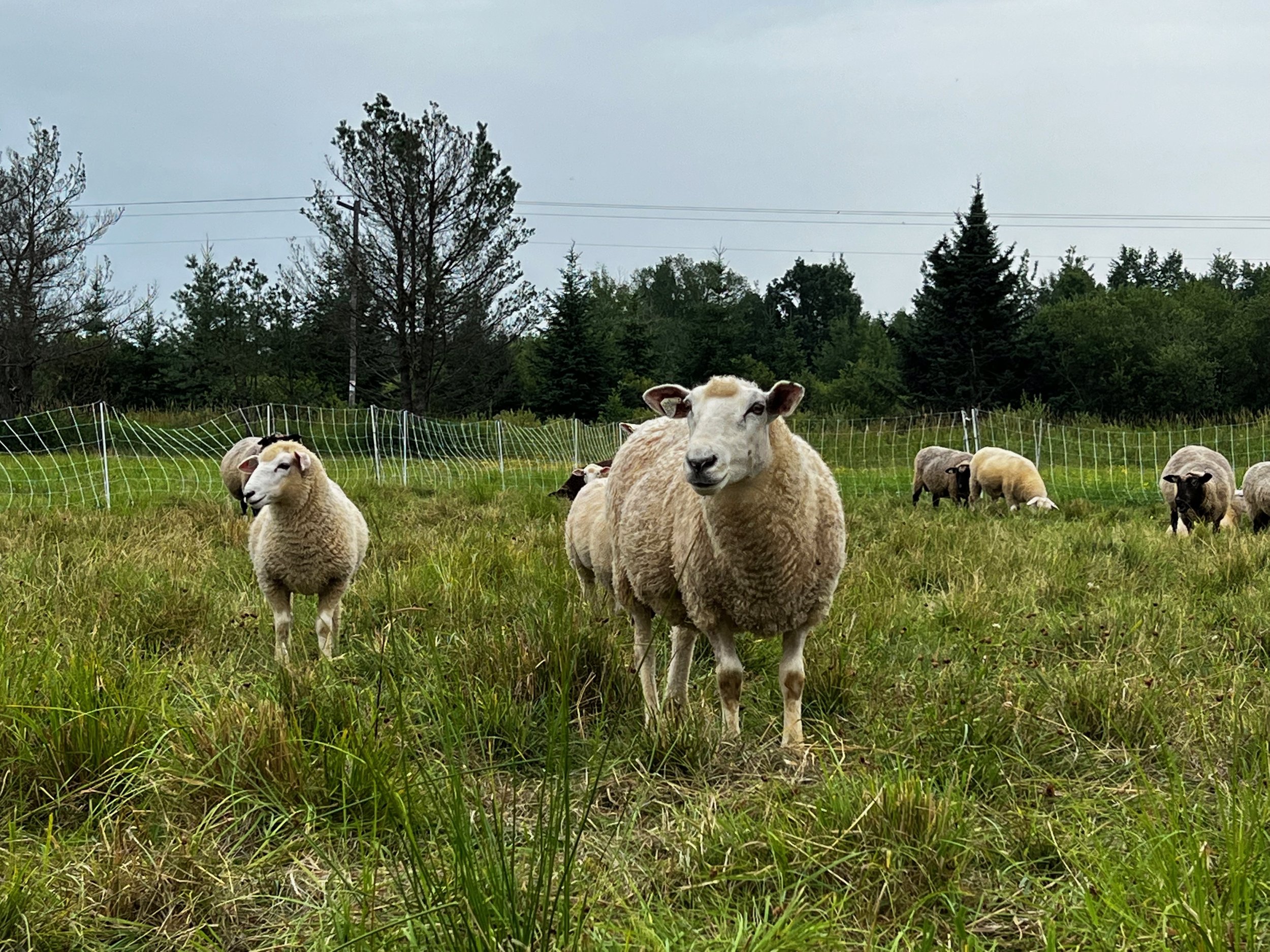
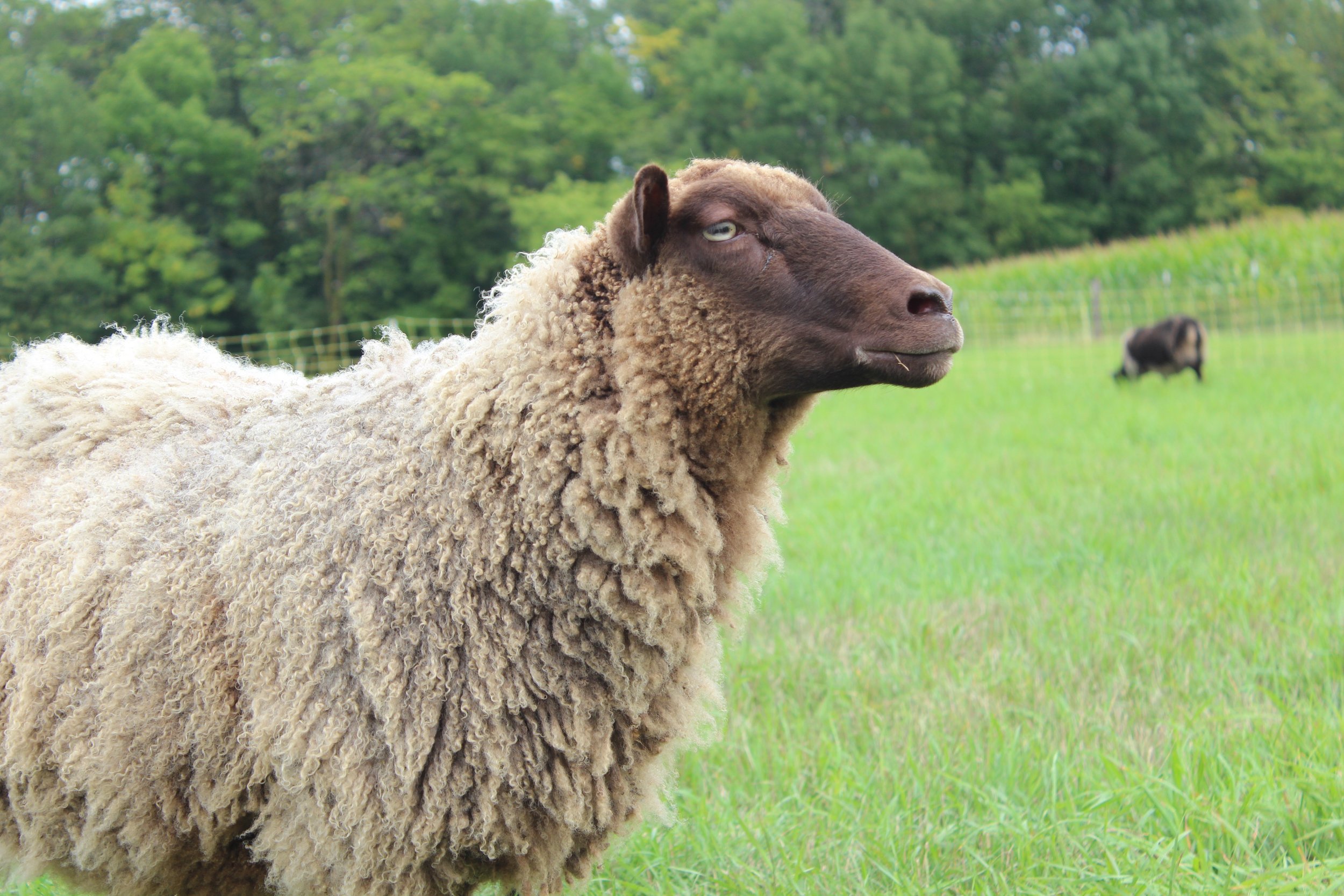
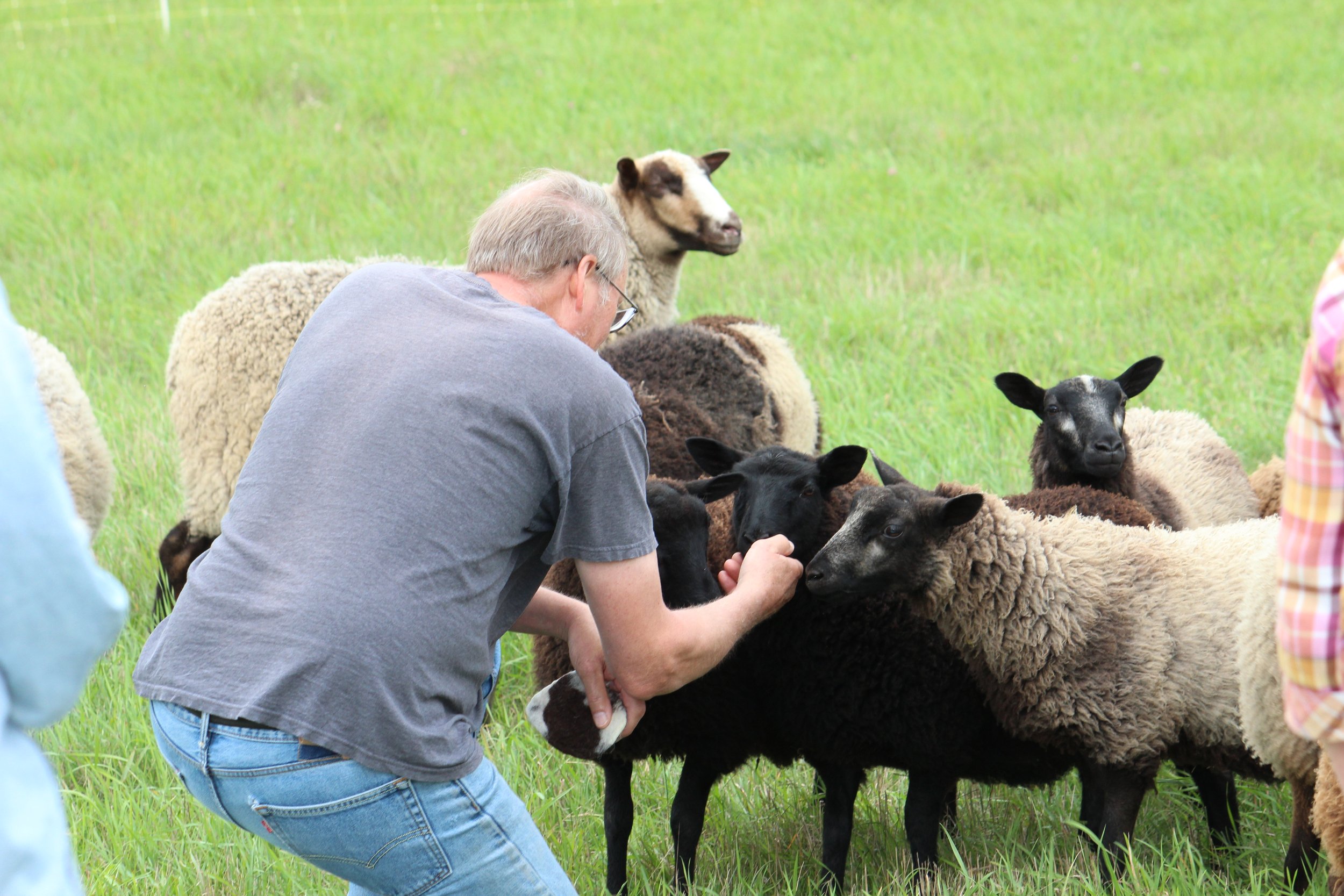
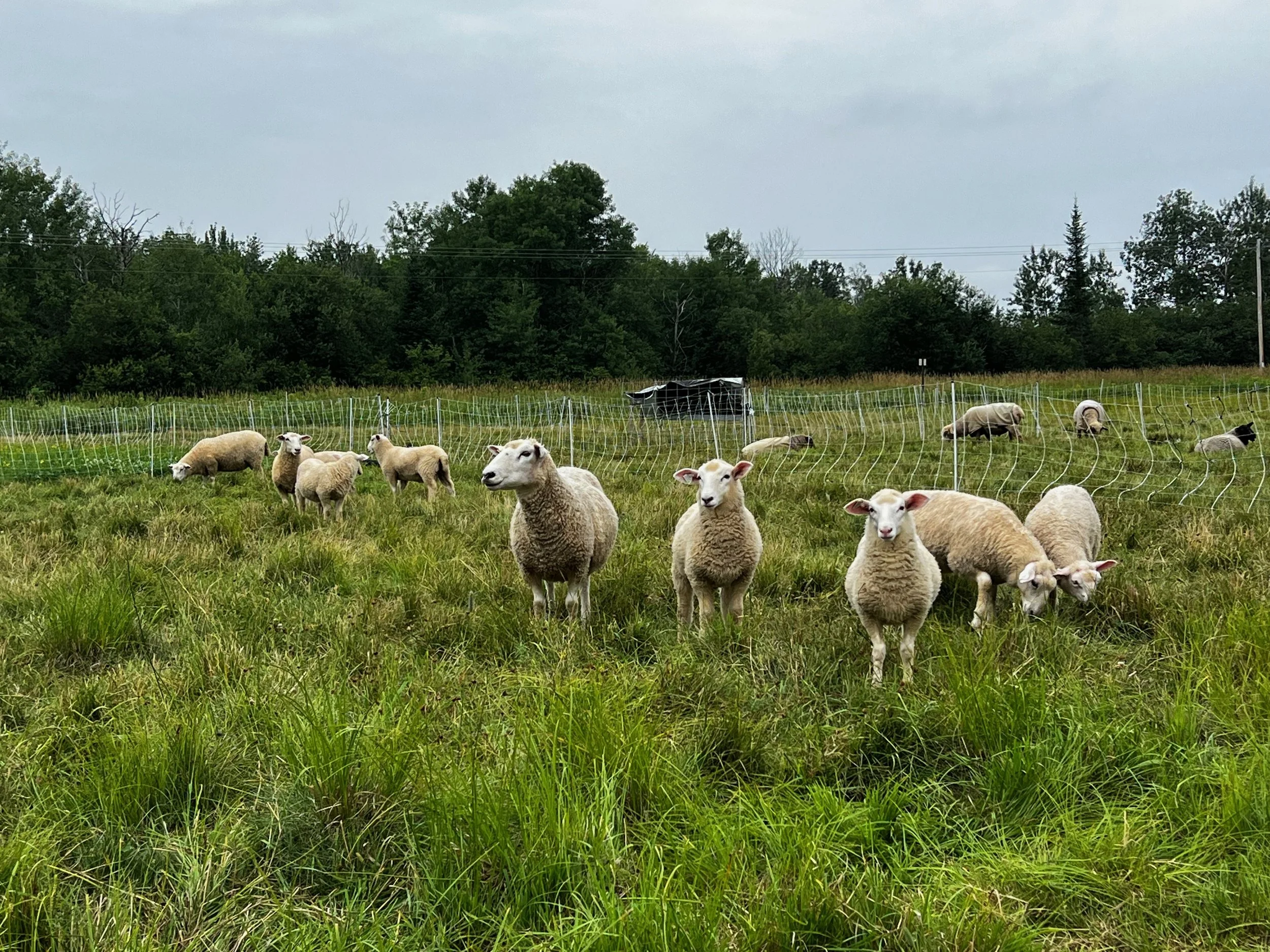
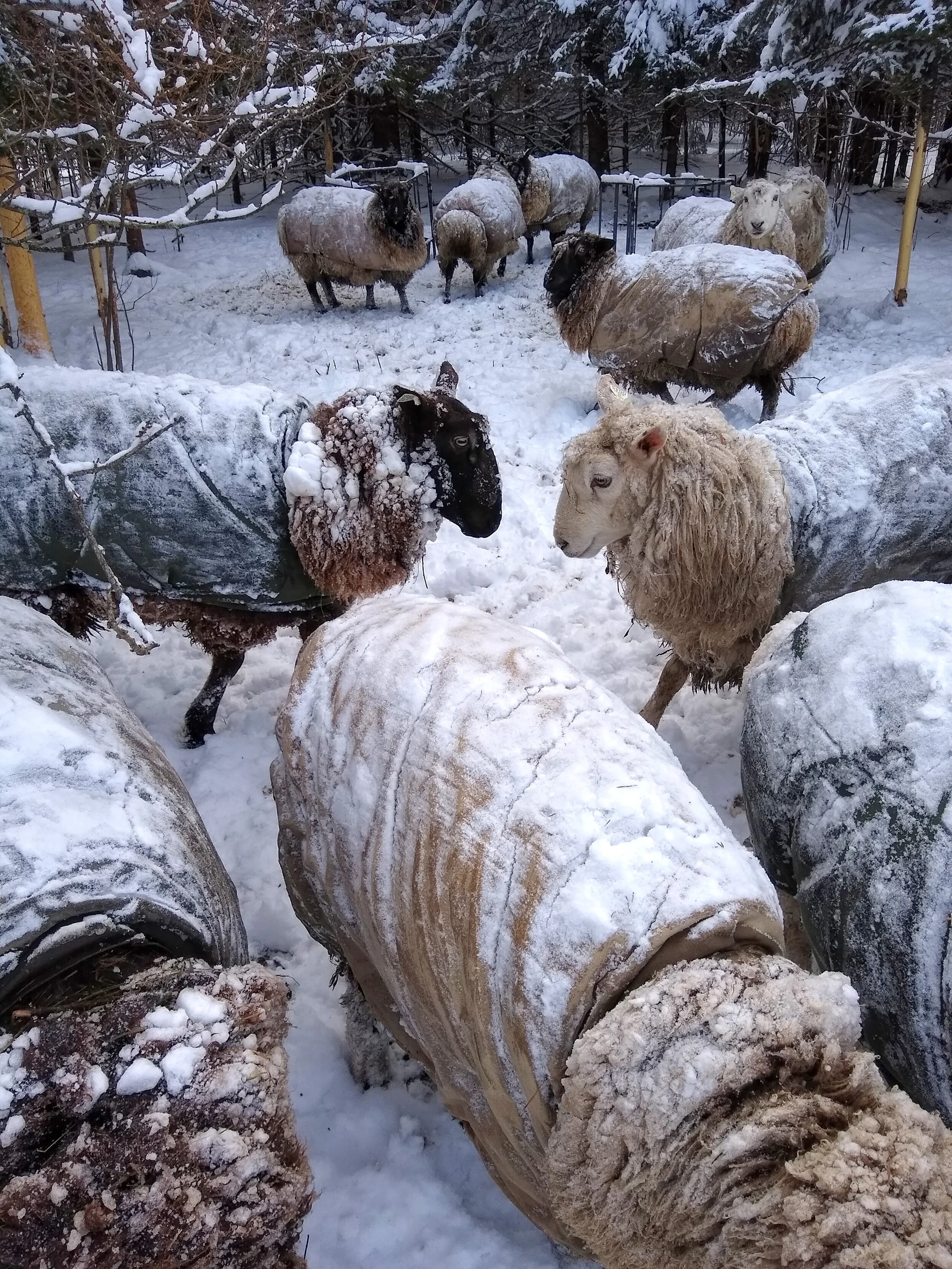
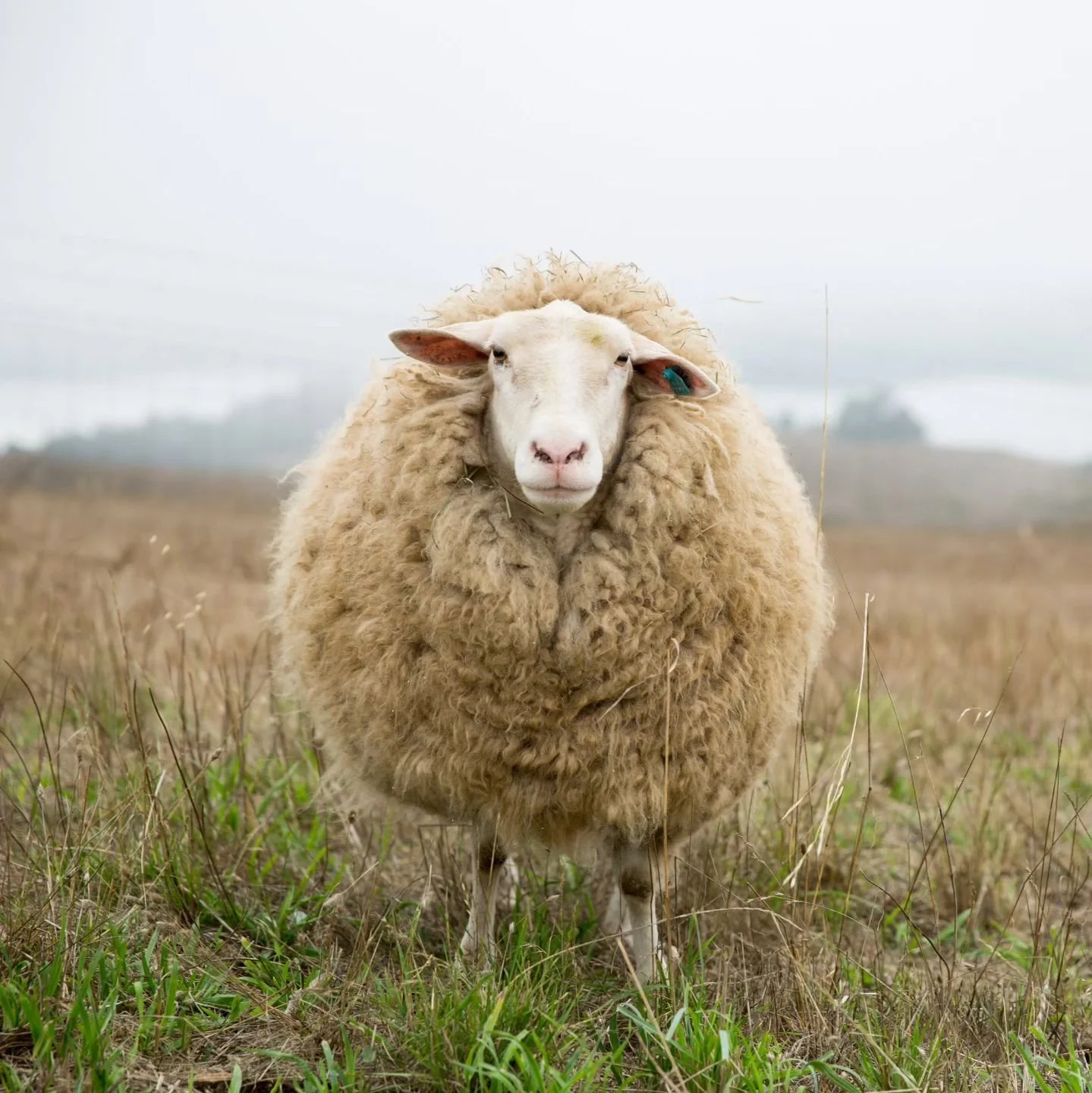
Sheep at Autumn Larch Farm
Photo by Danielle Endvick, Wisconsin Farmers Union

TRF steward, board member Jane Hansen receives Wisconsin Farmers Union Builders award

Three Rivers Fibershed steward and board member Jane Hansen of Autumn Larch Farm was awarded the Builders Award at the 2022 Wisconsin Farmers Union convention for her work supporting small farmers, regenerative agriculture, and the Three Rivers Fibershed. Other award recipients included Mandela Barnes, Joy Krikpatrick, Paul Adams, and Cathy Statz.

Wisconsin Farmers Union recognizes members, rural allies for commitment to family farms 

WISCONSIN DELLS
– Wisconsin Farmers Union (WFU) honored several individuals for their dedication to family farmers at the 92nd annual Wisconsin Farmers Union State Convention Dec. 9-11th. The event drew more than 200 farmers to Wisconsin Dells for a weekend of networking, educational workshops and grassroots policymaking. 

Friend of the Family Farmer

WFU recognized two Friends of the Family Farmer, Joy Kirkpatrick and Mandela Barnes. First given in 2013, the award recognizes those who have gone above and beyond in efforts on behalf of family farmers and rural communities. 

Kirkpatrick has worked in the University of Wisconsin since 1993. She began her university career as a county-based Dairy & Livestock Extension Agent. In 2004 she became the Outreach Specialist for the Center for Dairy Profitability, earning distinguished status in 2019. She has facilitated hundreds of farm succession discussions with farm families, organizing programs like "Returning to the Farm" and "Shifting Gears for Your Later Farming Years." She also helps farmers address stress and access mental health care through Wisconsin’s Farm and Ranch Stress Assistance Network. Joy grew up on a hog farm in Southern Illinois.

β€œThe work Joy has done around farmer mental health through the years has undoubtedly saved lives,” said WFU President Darin Von Ruden. β€œHer ongoing work to support family farm transitions helps ensure the future of Wisconsin agriculture.”

Von Ruden noted the WFU Board of Directors’ decision to honor Lt. Gov. Barnes was not taken lightly, given the organization’s nonpartisan nature.

β€œAfter watching Mandela reach out to family farmers and rural Wisconsinites this year during his β€˜Barnes to Barns’ tour, we wanted to recognize his efforts,” Von Ruden said. β€œMandela was the first candidate in a long while who truly seemed to tune into the issues that mattered on our farms and in our communities.”

Barnes, the son of a school teacher and a United Auto Workers member, became Wisconsin’s first African American Lieutenant Governor in 2019. Born and raised in Milwaukee, he attended Milwaukee Public Schools and Alabama A&M University and has become a recognized leader on issues of economic justice, racial equity, and sustainability. At age 25, Mandela was elected to the State Assembly, serving two terms.

Barnes oversaw the Governor’s Task Force on Climate Change, where he gave farmers a seat at the table and invited WFU to help lead the discussion. This past summer and fall, during his run for Senate, Mandela visited WFU member farms and attended WFU’s candidate roundtables that focused on small businesses and family farm issues -- even after other candidates opted to no-show. 

β€œMandela truly showed up, and we look forward to seeing how he continues to show up for Wisconsin,” Von Ruden said. β€œWe wish him all the best in his next chapter and look forward to seeing how he continues to be a Friend of the Family Farmer.”

Builders Awards

Jane Hansen of Ogema received the Builders Award, which recognizes outstanding commitment to building Farmers Union through county involvement, leadership development and member recruitment. 

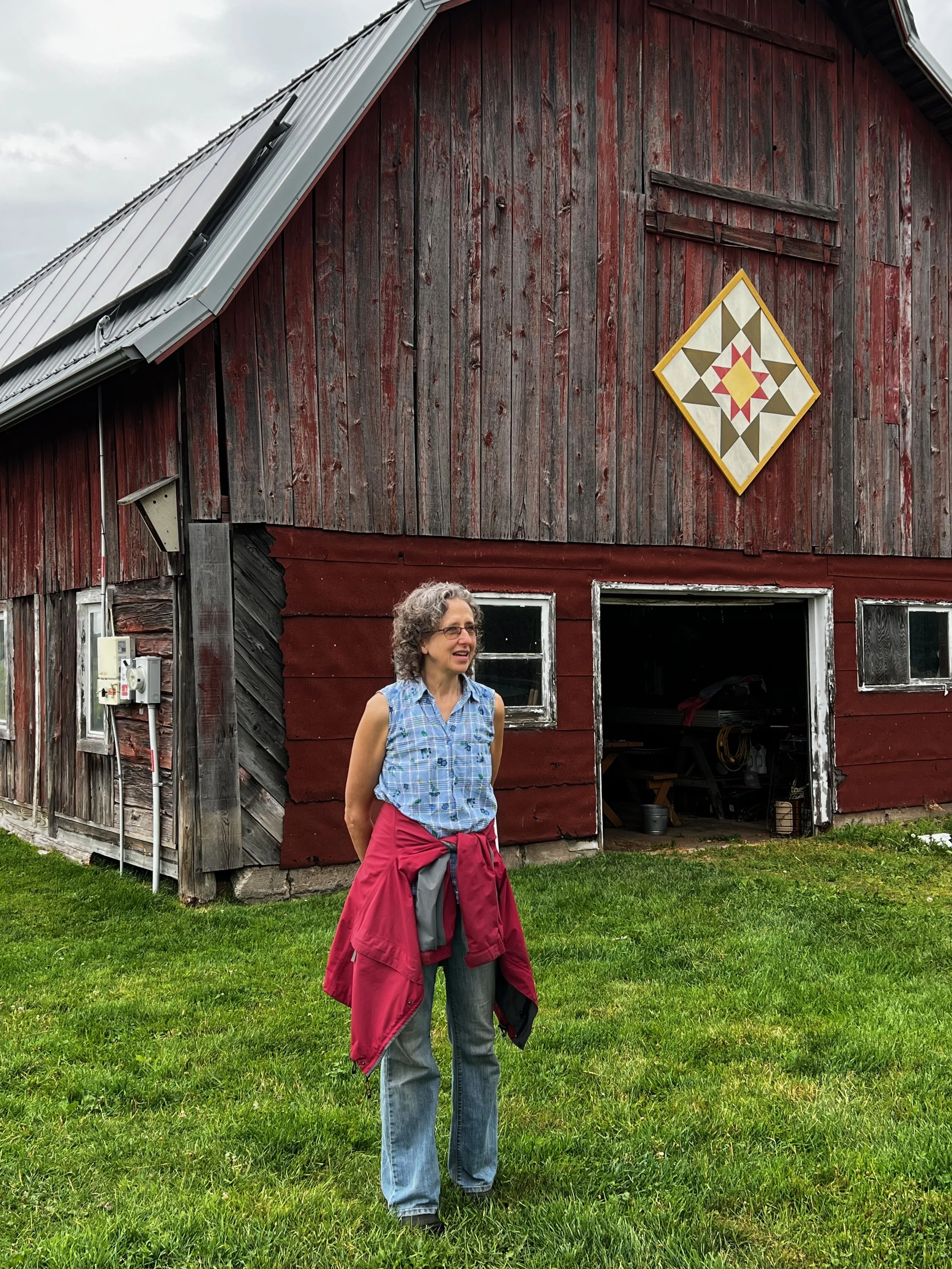
Hansen is an officer of the Taylor-Price Farmers Union and shepherdess of Autumn Larch Farm, located near Ogema. She has opened up her farm to educate others about regenerative agriculture and to share the techniques she has learned in the pursuit of healthy sheep, high quality wool, environmental stewardship, and a commitment to the regional economy. This fall Hansen, who is also an active member of Three Rivers Fibershed, pulled together collaborative partners, including WFU, for the inaugural Farm and Fiber Tour. The event included tour stops on farms throughout western Wisconsin and educated community members about farming practices. 

β€œJane has strengthened WFU’s visibility in her region and beyond,” Von Ruden said. β€œShe is also active in policy discussions, educating other farmers about the value of farmed fiber for textiles. Farmers Union is stronger due to her leadership and collaborative spirit.”
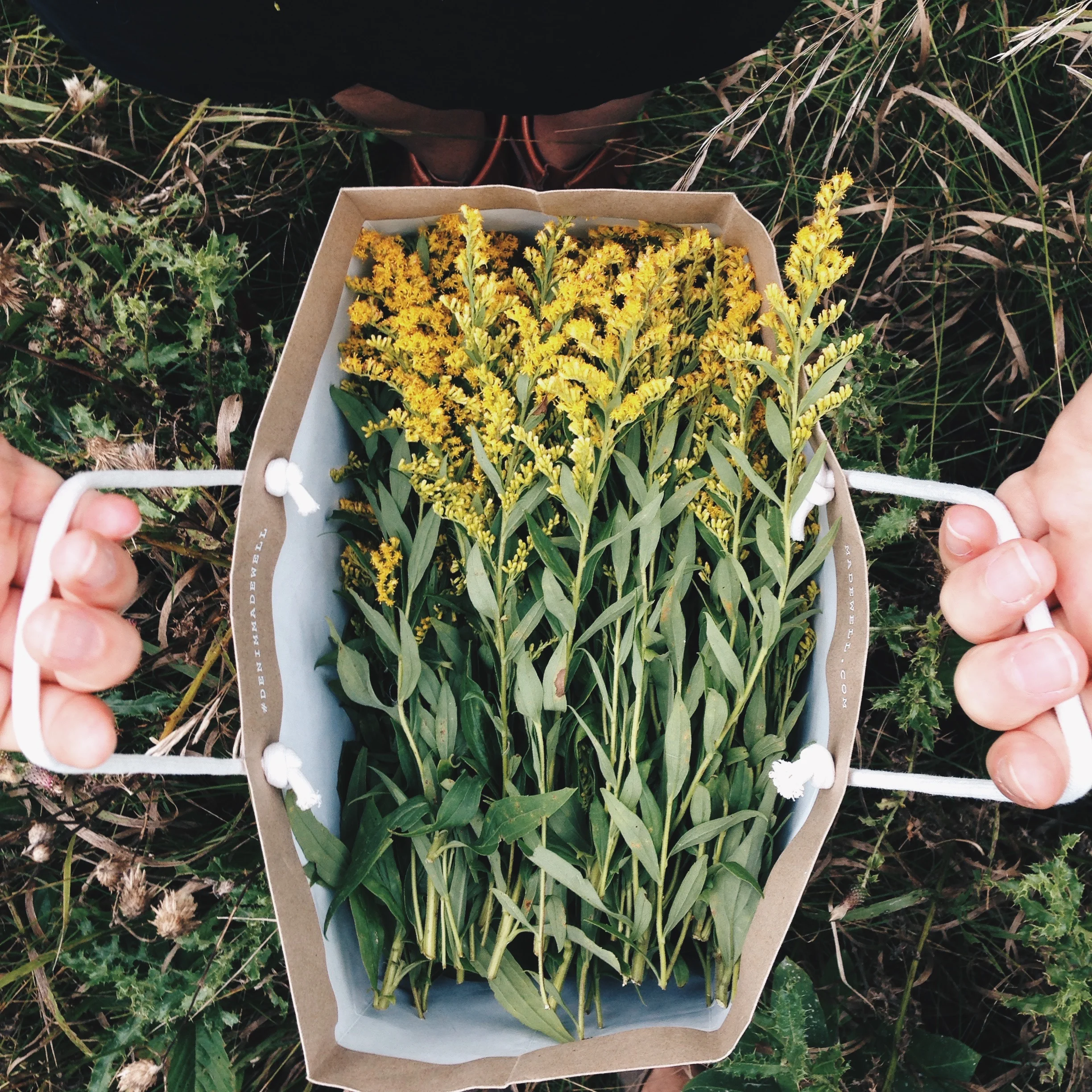
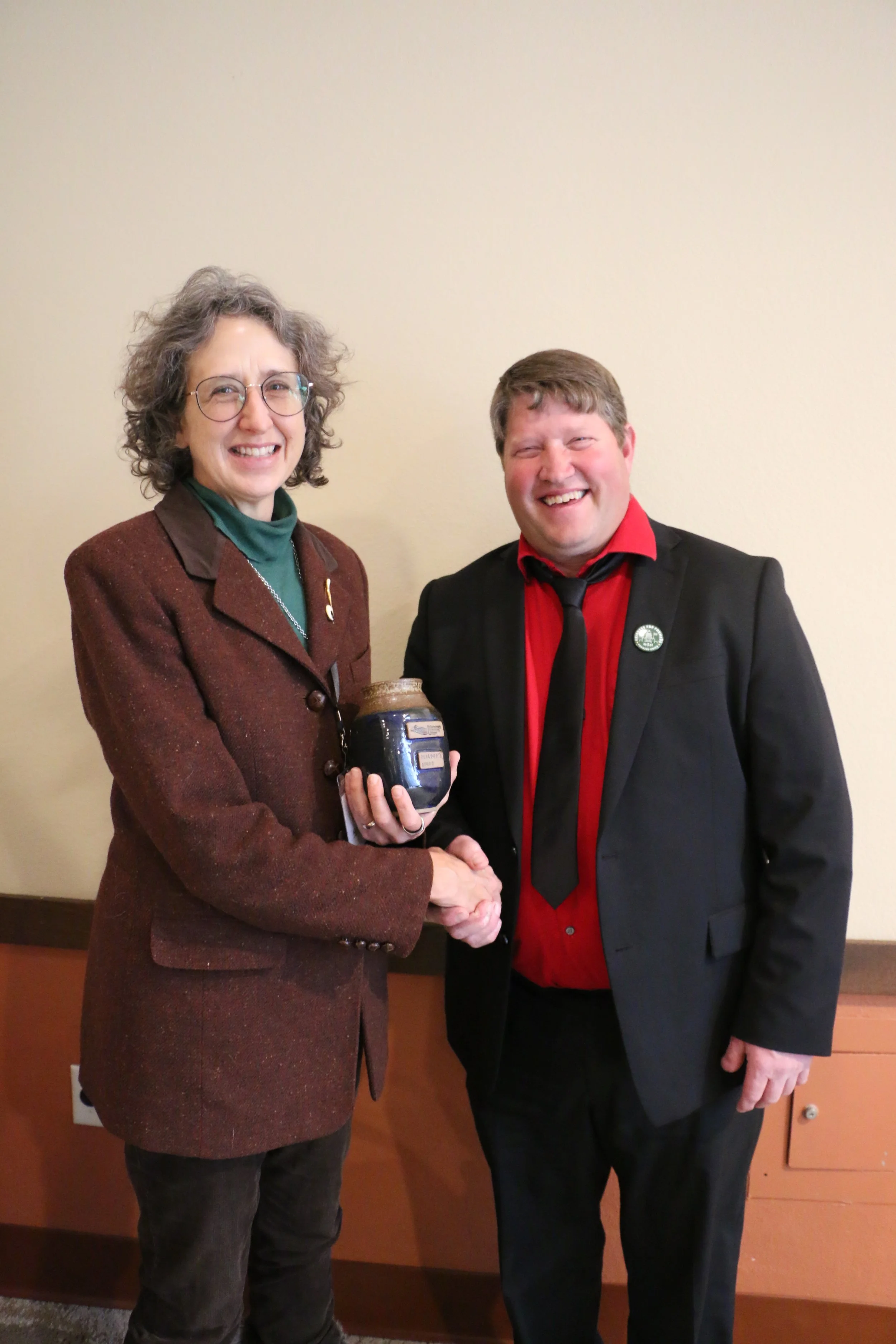
Taylor-Price Farmers Union member Jane Hansen was the recipient of a Builders Award at the 92nd WFU State Convention December 10th in Wisconsin Dells.  Pictured here accepting the award from WFU President Darin Von Ruden (right).

Emerging Leader

This is the third year that WFU presented a special Emerging Leader award to an individual who has ignited energy and engagement in WFU. This year’s Emerging Leader is Paul Adams.

Until 2020, Adams and his wife, Joann, and daughter, Becky, operated a 900-cow organic dairy farm in Eleva. Adams Dairy had been in his family for nearly 150 years before a crash in the organic dairy market forced the family to make the difficult decision to sell the herd. Adams went into dairy farming after graduating from high school in 1970, starting out with 30 cows and attending the UW Short Course. 

Adams has been heavily involved with WFU’s Dairy Together efforts, attending two fly-ins with WFU in 2022 to promote the Dairy Revitalization Plan. 

β€œDespite his family’s loss, Paul continues to have a passion for Wisconsin agriculture,” Von Ruden said. β€œWhile many people in his situation could have turned completely away from agriculture, Paul has taken the challenges life has thrown at him and has let the adversity mold him into a strong advocate for his fellow farmers.”  
Bruce Miller Award

WFU also announced that Cathy Statz was chosen to receive the 2023 Bruce Miller award, which will be presented at the National Farmers Union Convention in San Francisco in March.

The award is named in honor of the late Bruce Miller, who was an active member WFU and served on the staff of Minnesota Farmers Union. It recognizes individuals within Farmers Union who display a true passion for family farming and rural America, while promoting the work of Farmers Union.

Statz wrapped up her Farmers Union career in 2022, after 30 years staffing and 41 summer participating in the camp program. She spent her childhood on a 50-cow dairy farm near Sauk City and grew up attending Farmers Union meetings. Prior to joining WFU full-time, Statz spent four summers working on the WFU and NFU camp staff. She dedicated her career to cooperative education and advancing the quality of life for farm families, rural communities, and all people in her work with Farmers Union.

β€œCathy’s reach in Farmers Union went far beyond the education department,” Von Ruden said. β€œShe was often the first face of Farmers Union for new members, as they dropped campers off at Kamp Kenwood, or out and about at the countless dairy breakfasts, college career fairs, and cooperative events that she attended. Cathy instilled institutional knowledge and a cooperative spirit in those around her, and left an undeniable mark on this organization.”
Statz moved to Poland with her husband, Tom. He teaches at an international school; she continues to work remotely on projects that fit her passion: cooperative education. 


Learn more about WFU’s work on behalf of family farmers at www.wisconsinfarmersunion.com 

Winter Market

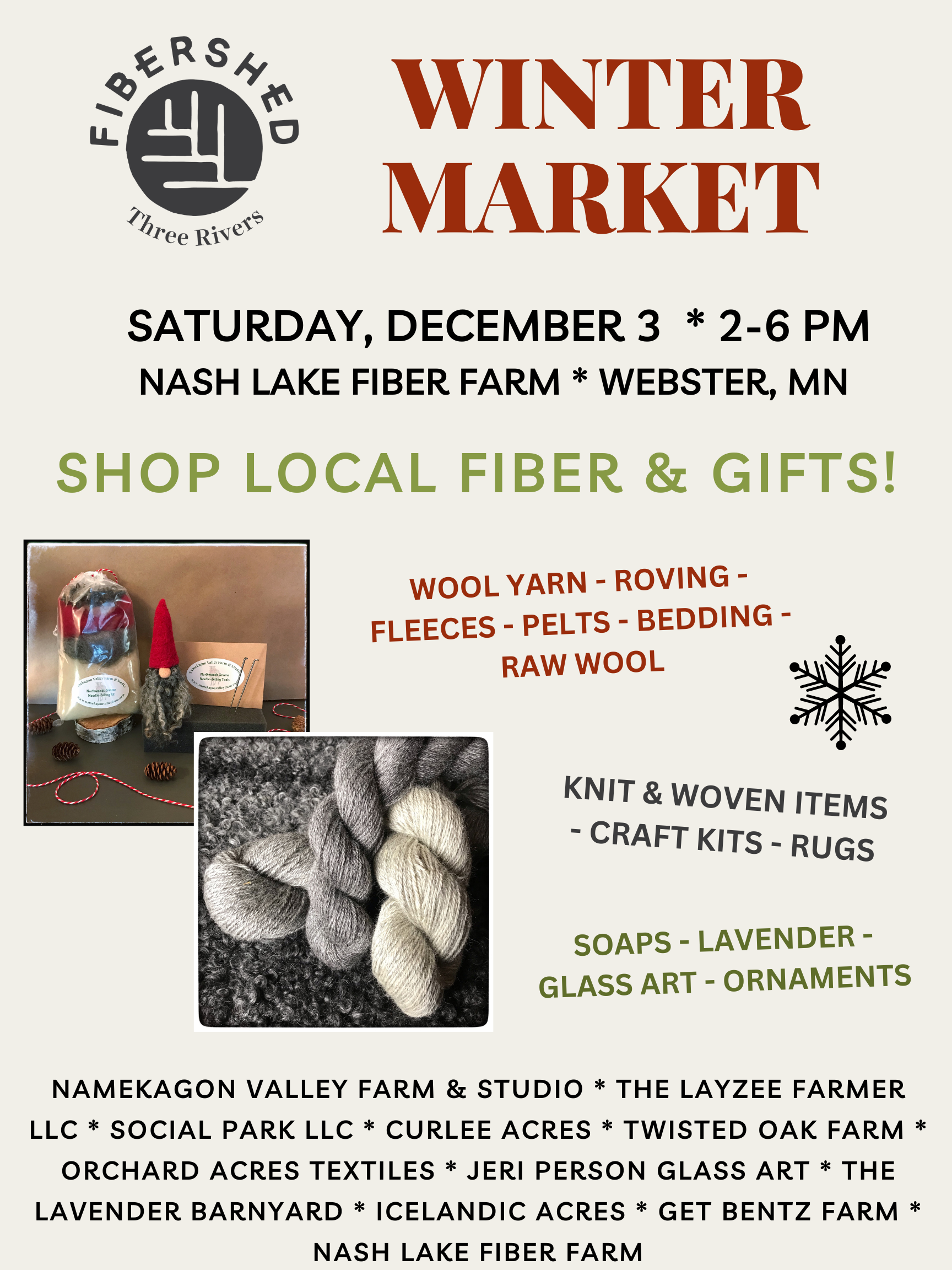
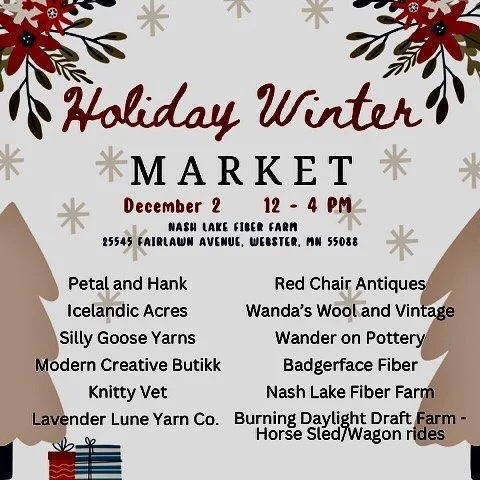
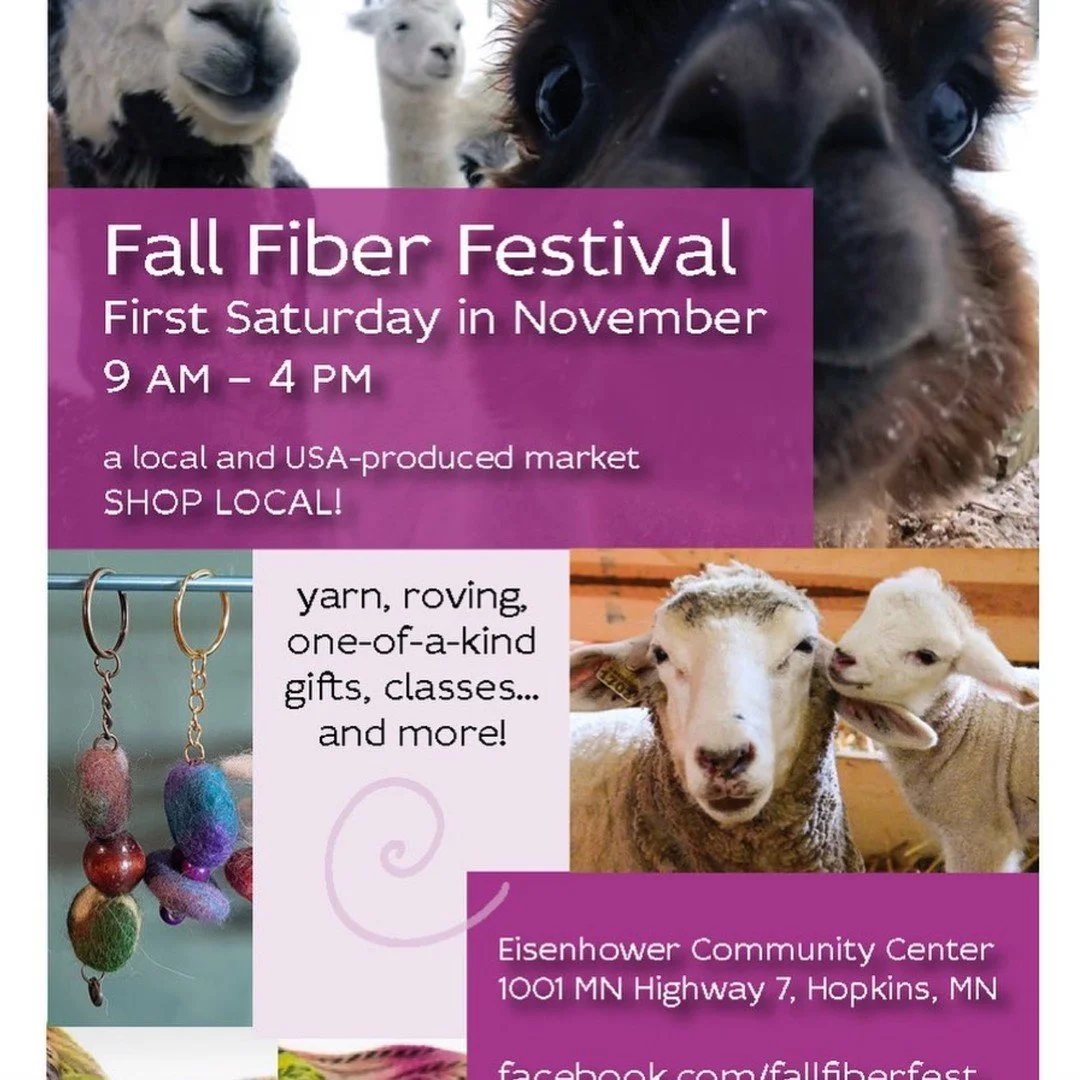
The Three Rivers Fibershed (TRF) Winter Market will be held at Nash Lake Farm in Webster MN on Saturday, December 3rd from 2-6pm. The theme for this event is a European Winter Market, and will focus on local fiber and gifts, local food items, and building community.

Address: 25545 Fairlawn Avenue Webster, MN, 55088

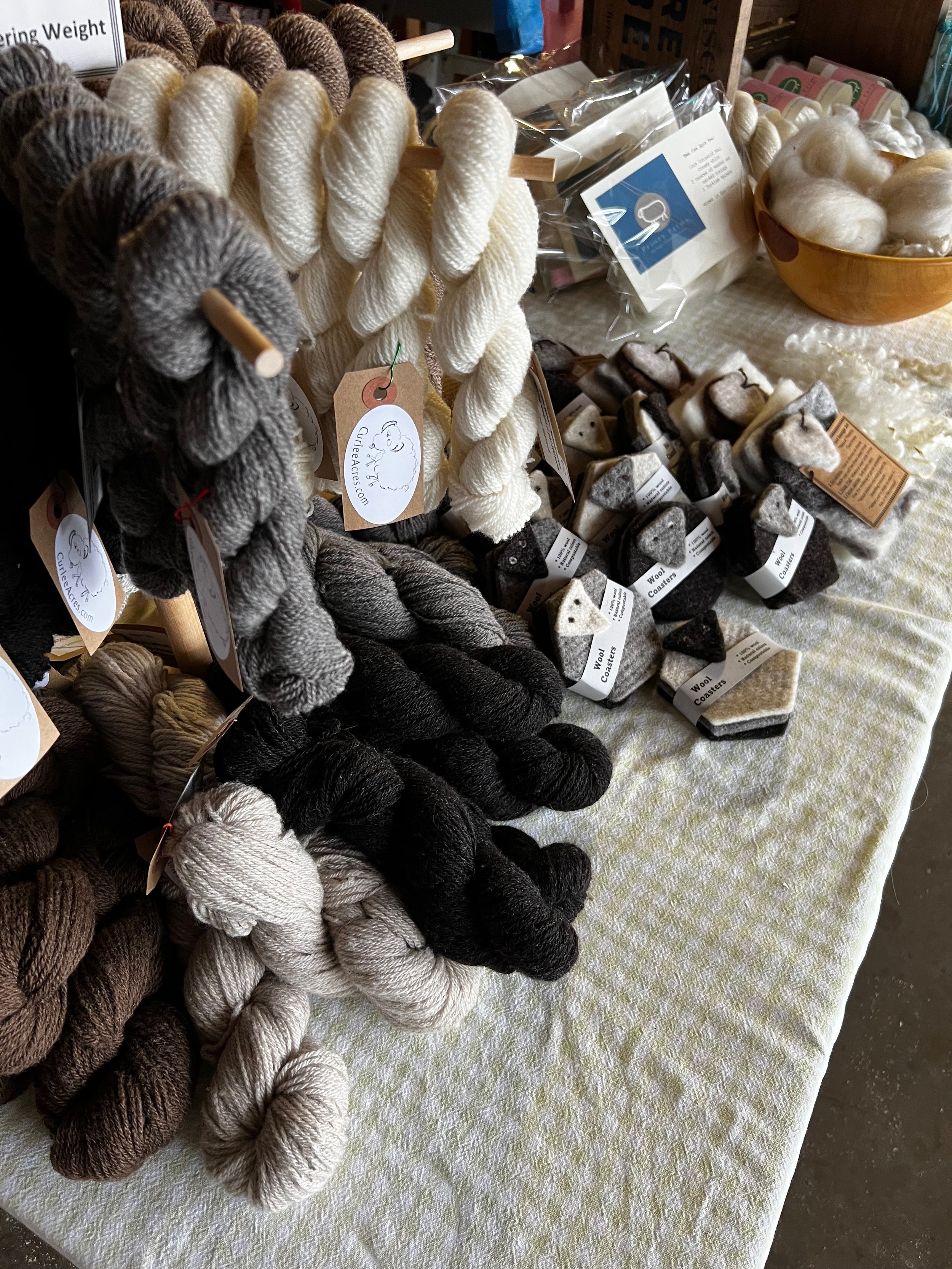
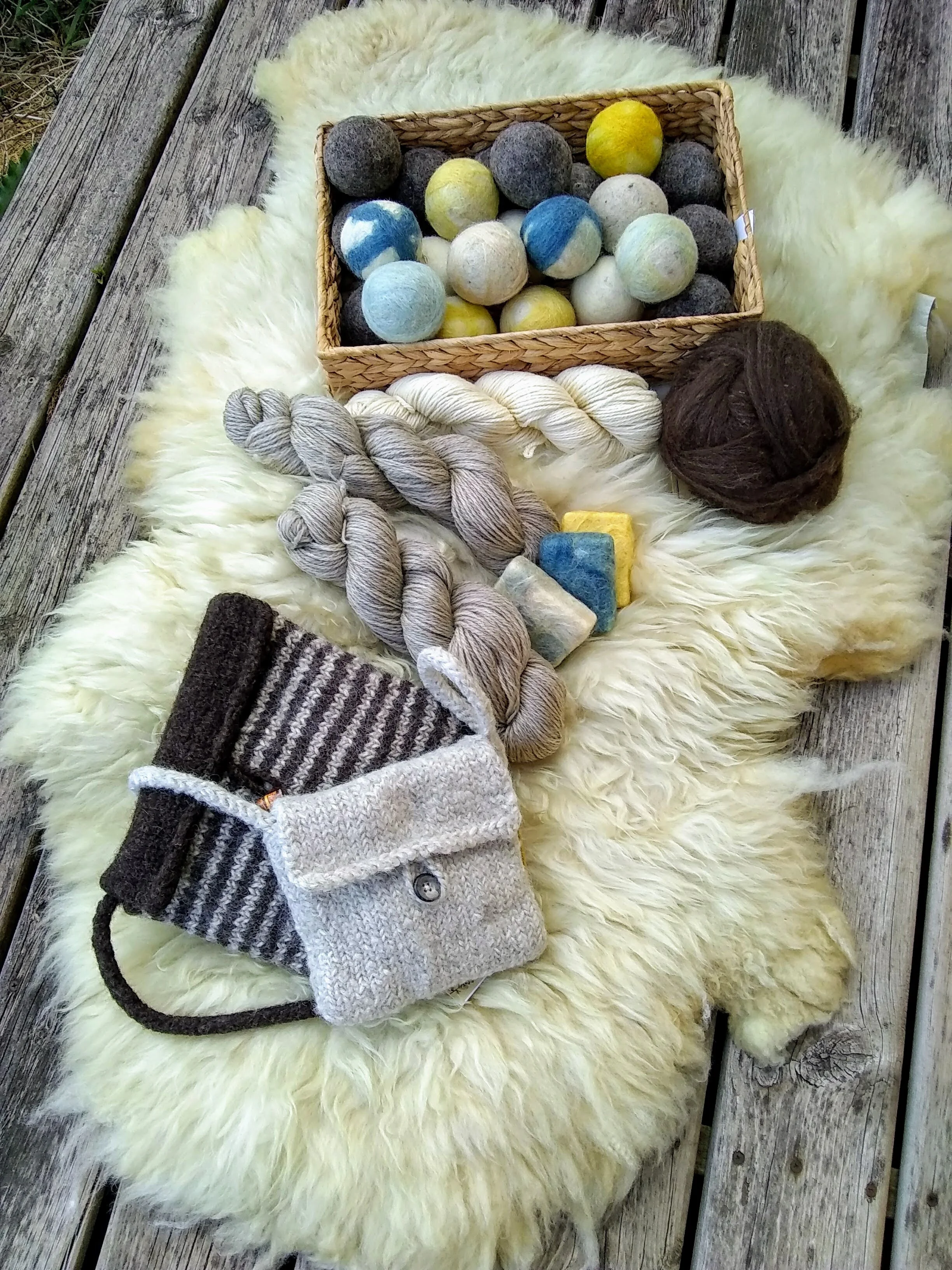
Shop a variety of local fiber goods including yarn, roving, wool fleeces, naturally dyed wool, wool filled bedding, rugs, dryer balls, pelts, ornaments, kits, and more! There will also be horse and wagon rides by Burning Daylight Draft Farm!

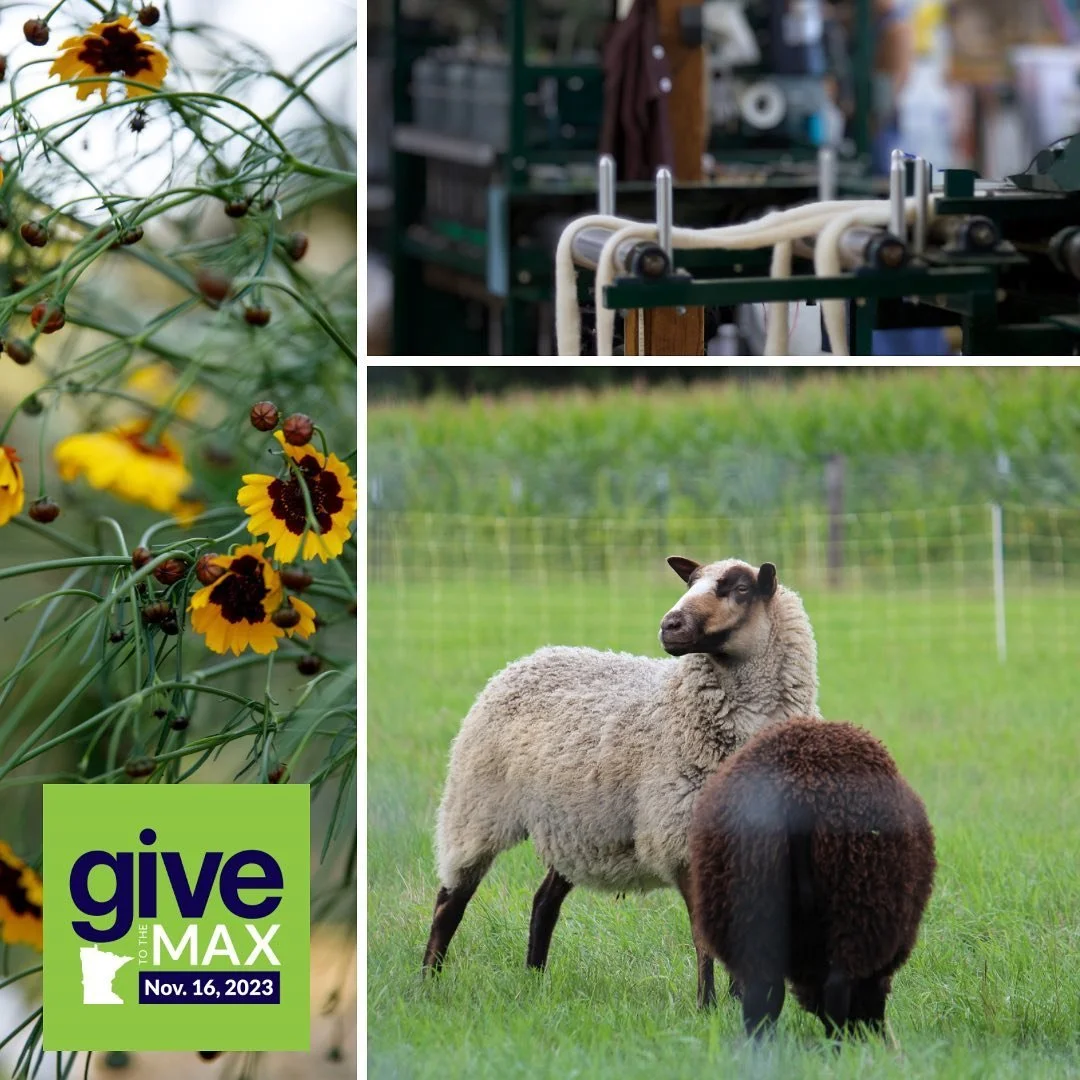
Give to the Max Day!

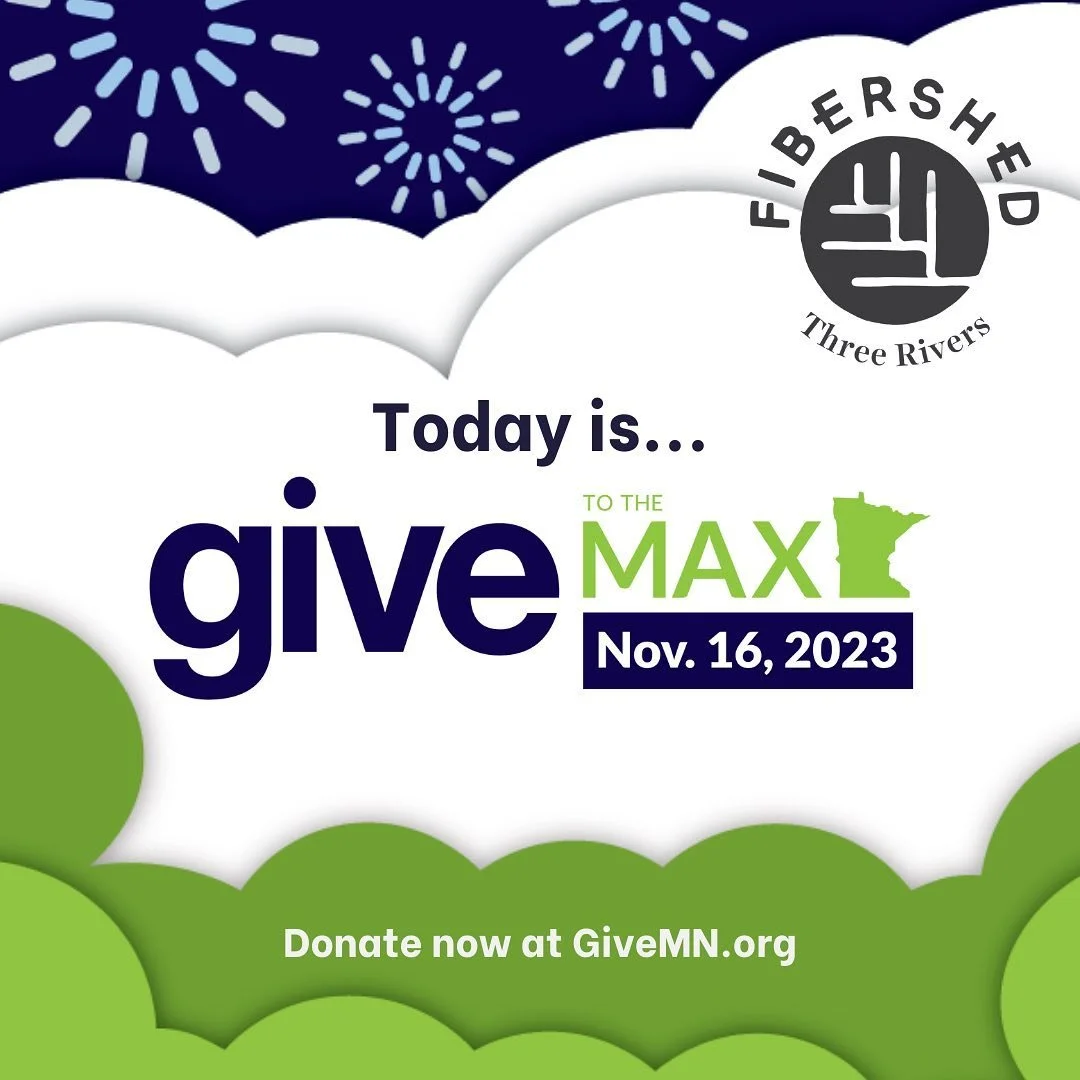
Give to the Max Day
November 17th!

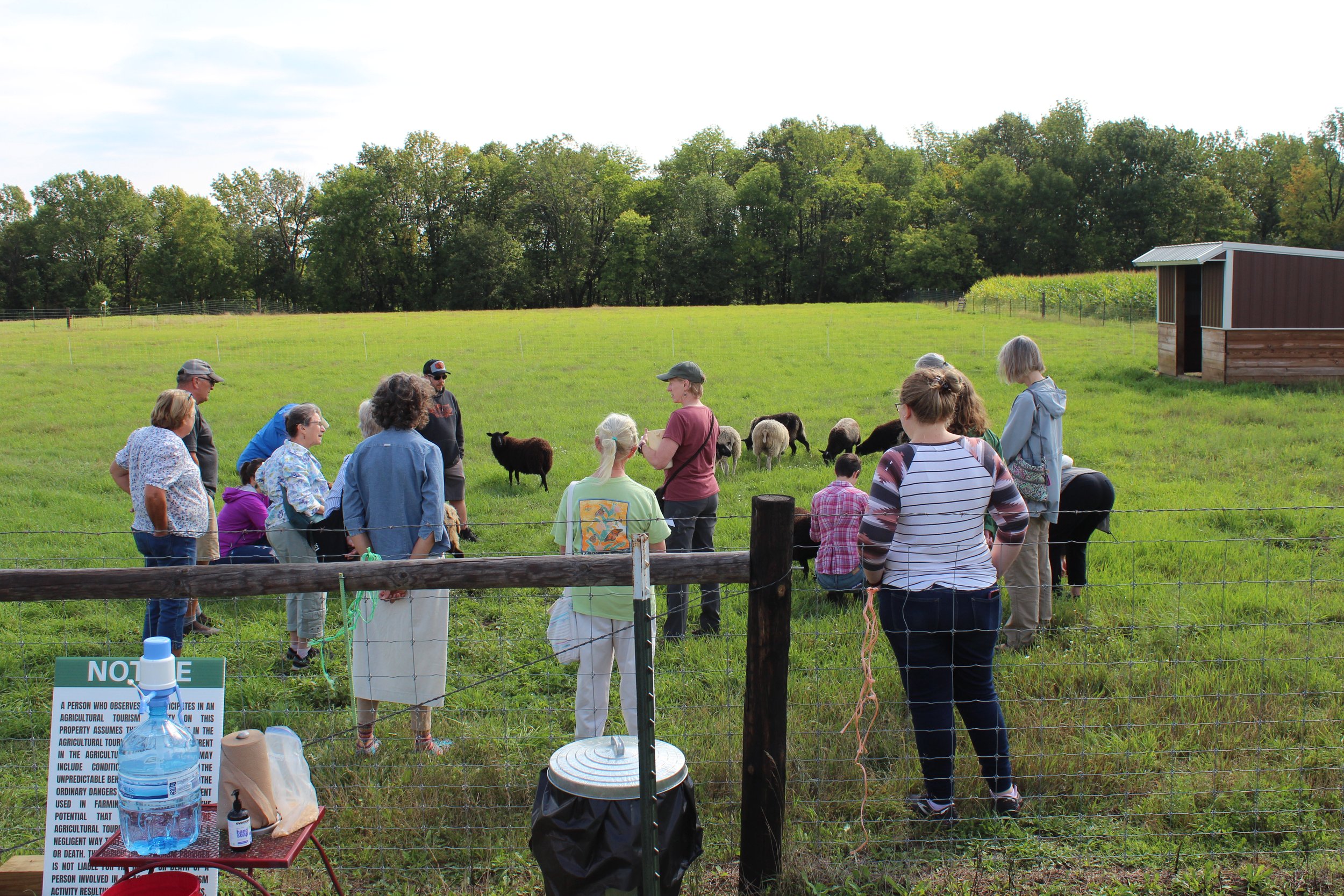
2022 Farm & Fiber Tour @ Curlee Acres
photo by Kathleen Melin

Join us in providing mutual aid so that all people have access to their local fibershed!

Your support this Give to the Max Day helps us continue to make participation in Three Rivers Fibershed programs as equitable and inclusive as possible.

Some may find the cost of participating in the fiber art prohibitive. Three Rivers Fibershed offers sliding scale classes, but the cost of quality, small-batch yarns and spinning fibers from our agricultural stewards and tools, such as knitting needles and spindles for spinning yarn, adds up. We seek to provide mutual aid, so that funds for materials are not a barrier to participation.

Donate Today

We are excited to be on this journey to sustainable fiber systems with you! If you have any questions, feel free to email us at hello@threeriversfibershed.org

Farm and Fiber Tour!

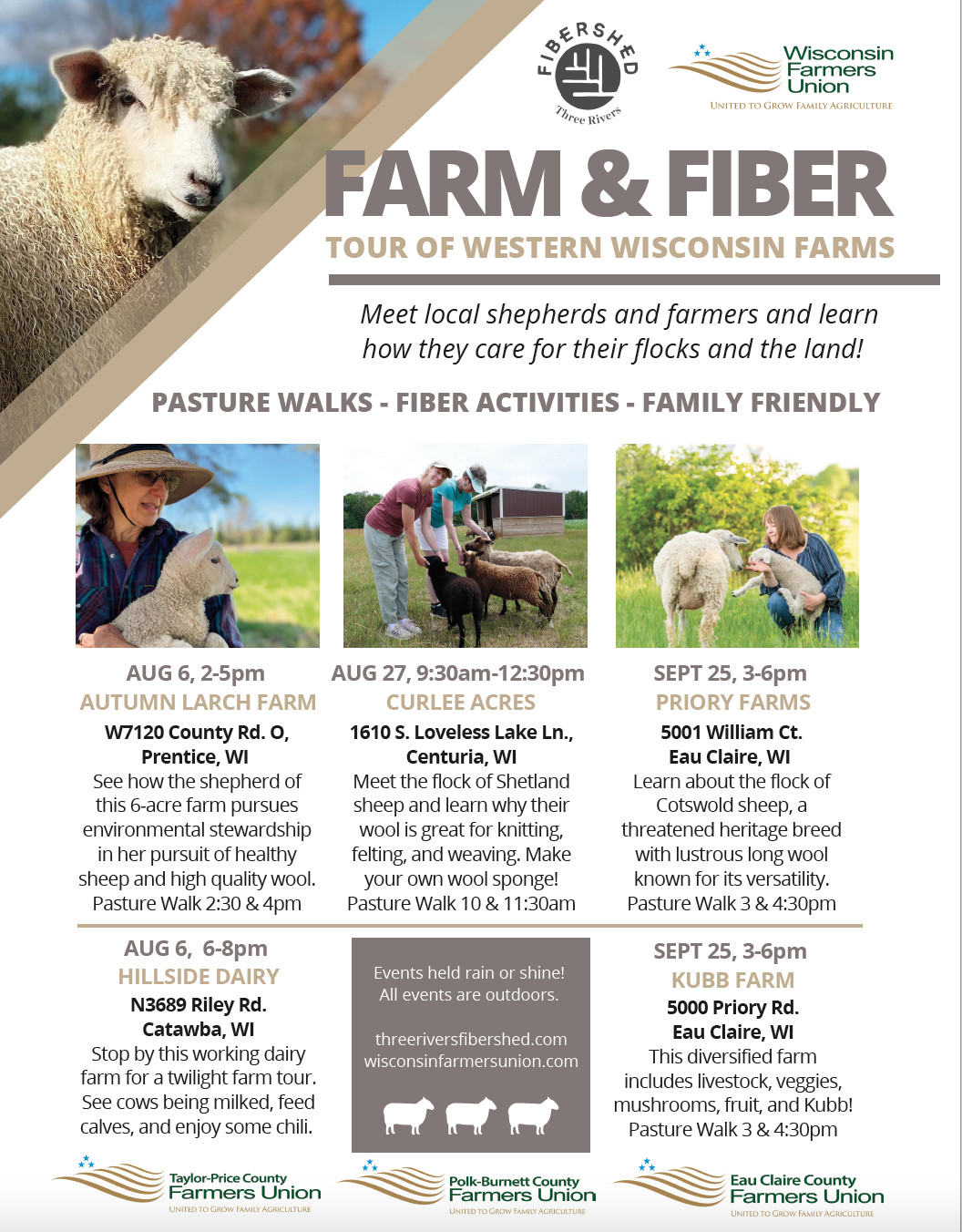
Farm & Fiber Tour: August - September 2022

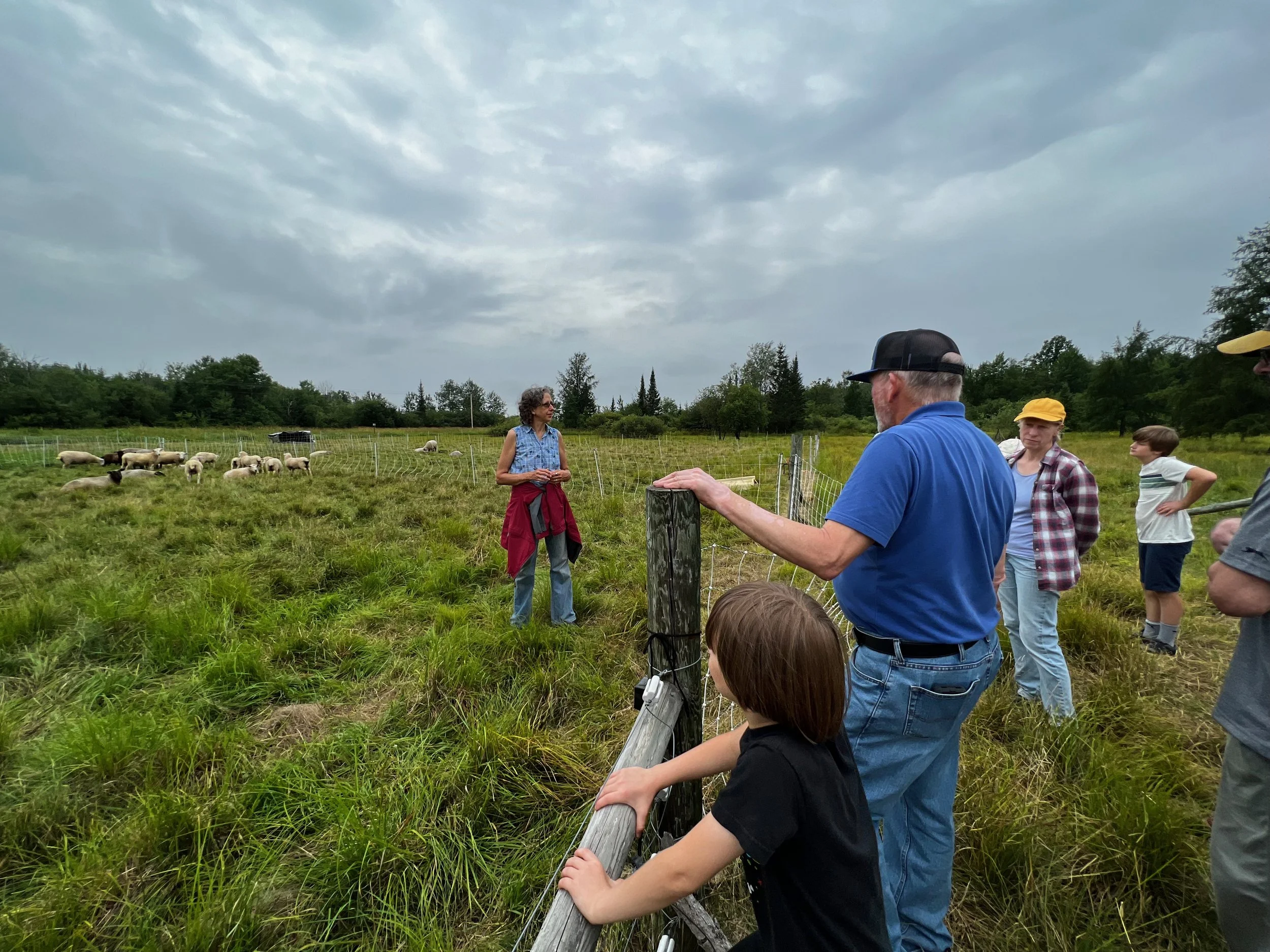
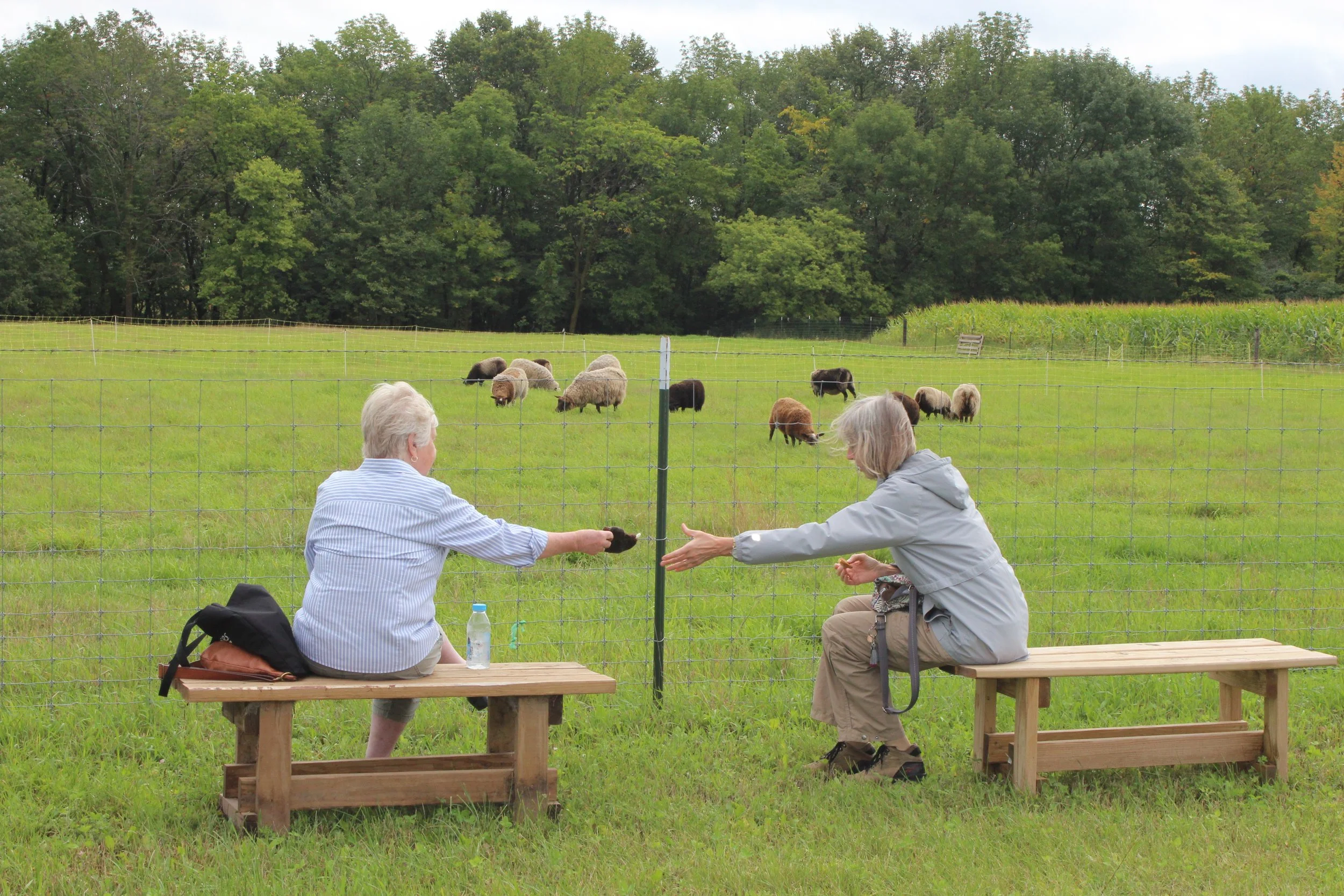
Join Three Rivers Fibershed (TRF) and Wisconsin Farmers Union (WFU) local chapters for a series of on-farm events highlighting local fiber farms, soil-to-soil farming practices, and regional textile systems in Wisconsin! Featuring WFU and TRF members/stewards, attendees will have the chance to connect with local farms and shepherds engaging in climate-beneficial, pasture-based farming practices and learn about TRF and WFU and their work to support farmers and cooperative efforts to promote local agricultural systems!

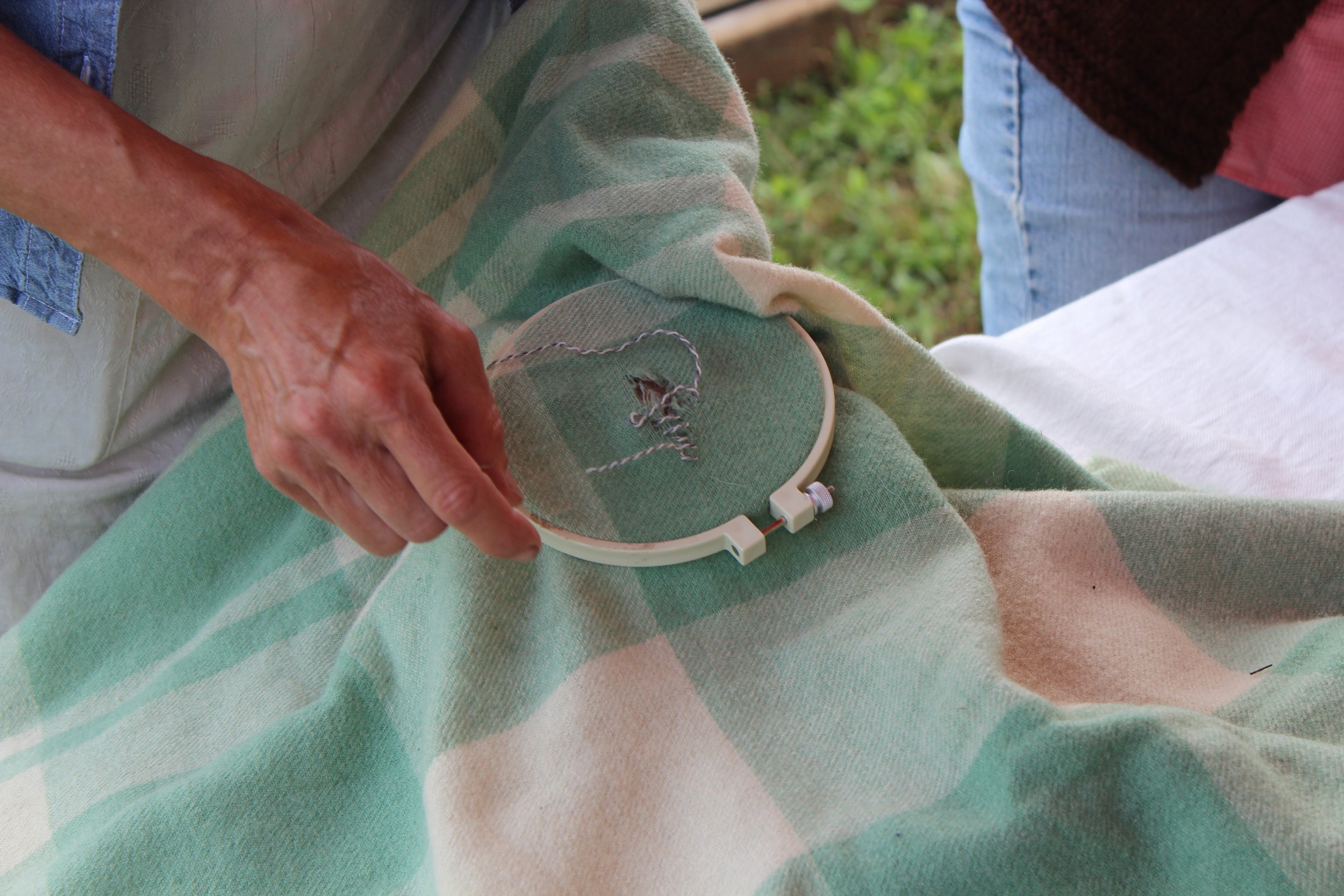
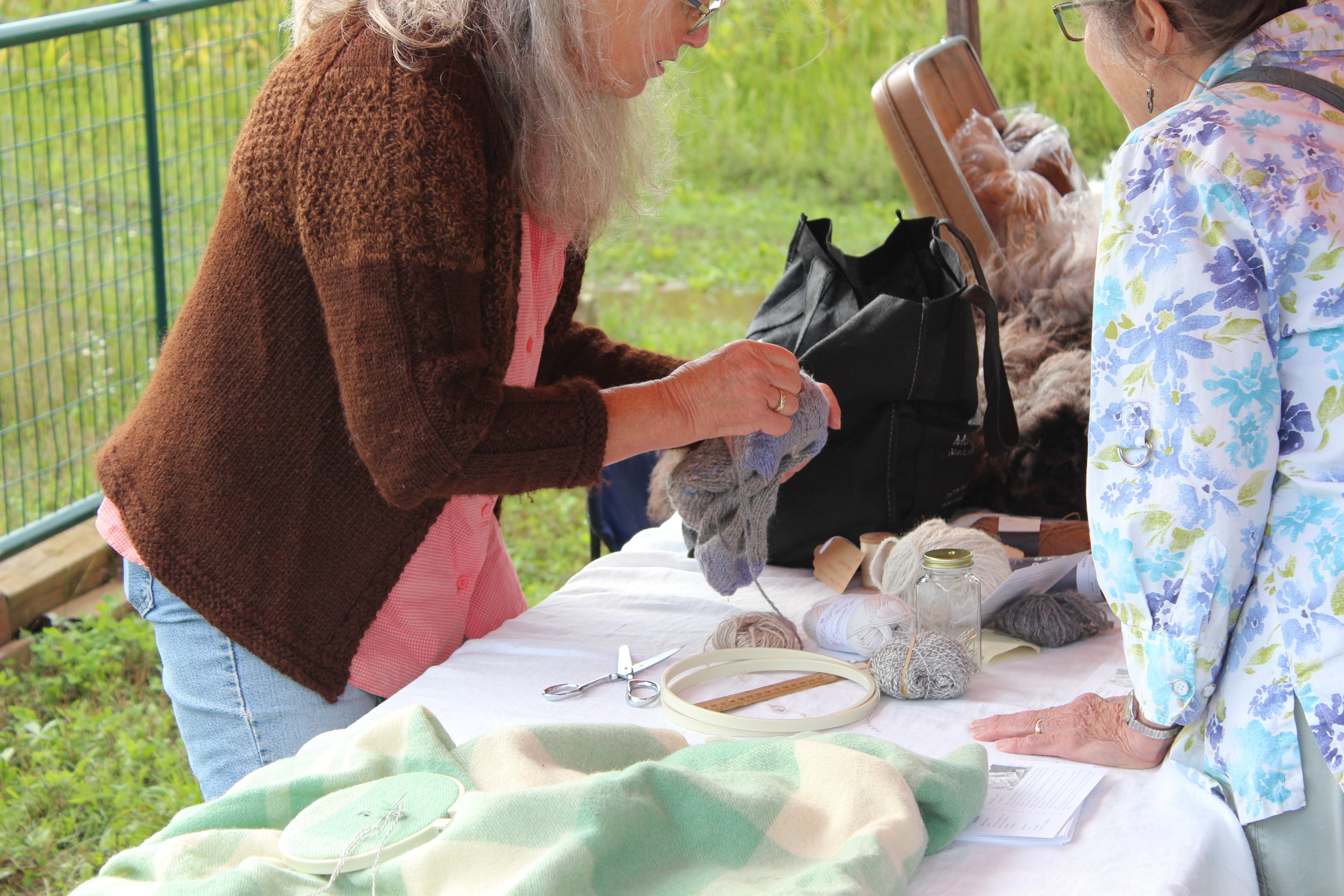
Events will feature farmer-led pasture walks; hands-on fiber activities; educational booths hosted by partner organizations; and wool, roving, and other products for sale.

  • Saturday, August 6th, 2-5pm - Autumn Larch Farm (Taylor-Price Chapter)
    W7120 County Road O, Prentice WI 54556

  • Saturday, August 27th, 9:30 am -12:30 pm - Curlee Acres (Polk-Burnett Chapter)
    159th Ave & 160th St., Balsam Lake, WI 54810

  • Sunday, September 25th, 3-6pm - Priory Farms and Kubb Farm (Eau Claire Chapter)
    5001 William Ct. Eau Claire, WI 54701

The Farm & Fiber Tour is a free event open to all community members. Additional details for each event can be found on our Events page.


The Farm & Fiber Tour is a partnership between Three Rivers Fibershed and WFU local chapters in Taylor-Price, Polk-Burnett, and Eau Claire counties and is supported with funding from the WFU Foundation Grant and Local Initiative Grant programs.

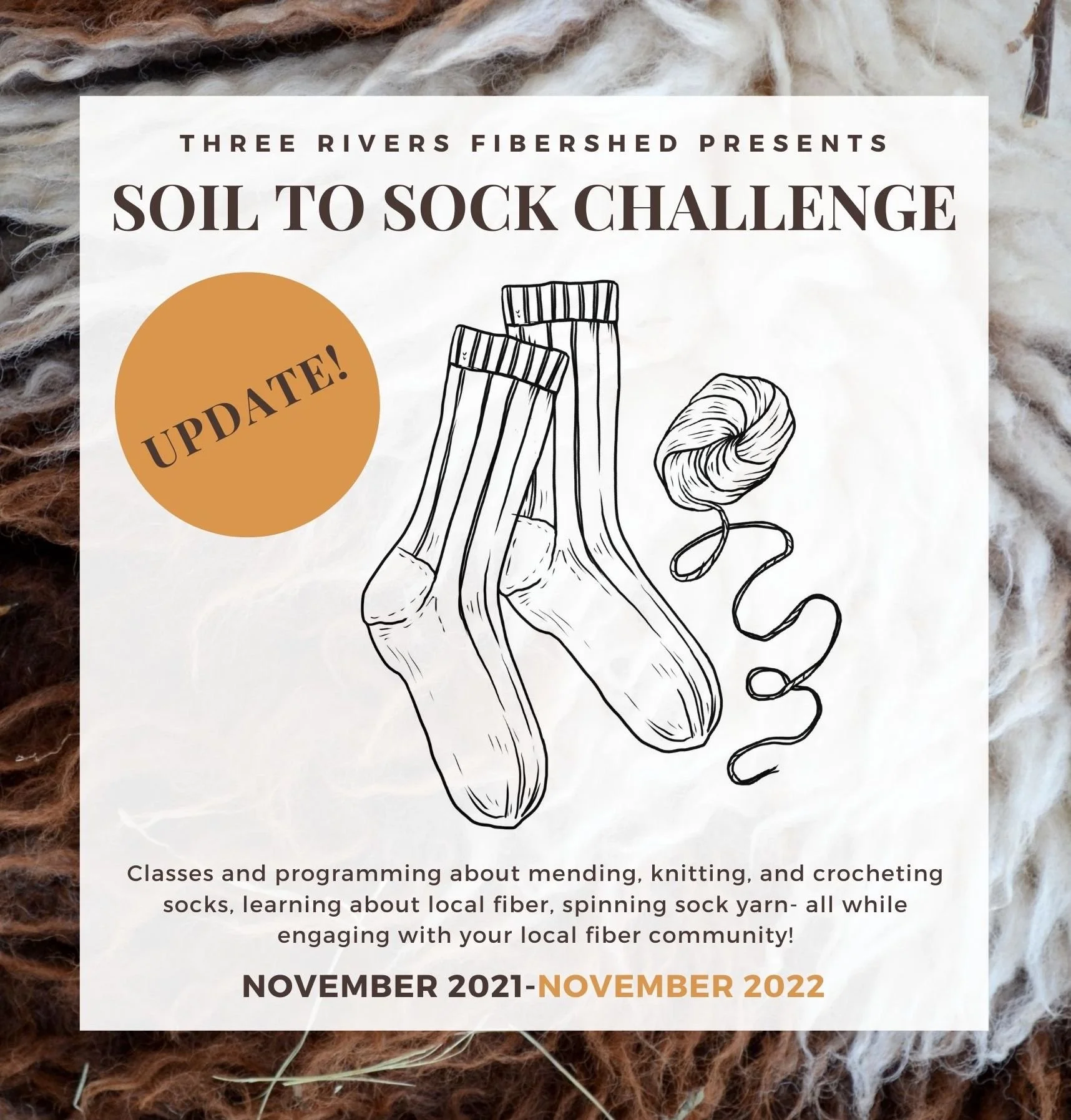
Soil to Sock Challenge: November 2021-November 2022

What is the Soil to Sock Challenge?

It's a collaborative endeavor aimed at bringing awareness to the life-cycle of our textiles seen through the perspective of one of our most utilitarian garments, socks!

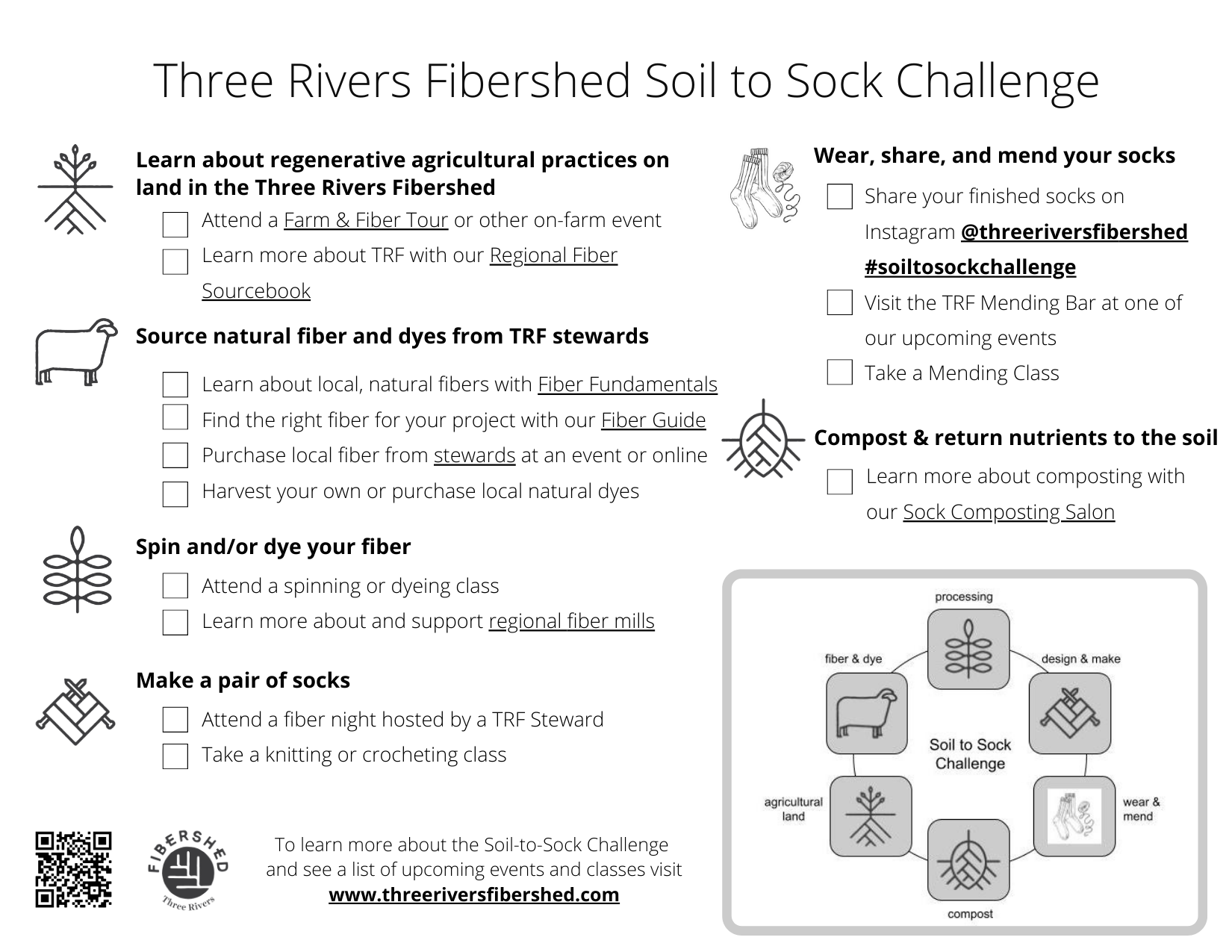
It's an invitation to deepen your understanding of our local fiber region by connecting with local fiber stewards and making/mending your own pair of socks using locally grown fiber.

Together community members, makers, and fiber stewards will have the opportunity to engage in programming and classes focused on sustainable textiles along the entire soil-to-soil cycle including mending, knitting, spinning, composting and more!

Our programming will run from November 2021 through November 2022. Throughout the challenge you can read more about our classes and engage with other community members through our page on Mighty Networks and through our social media accounts and website.

How do I get involved?

  • Make your own pair of socks! We are encouraging everyone to create (or mend) your own pair of socks with local fiber from your fibershed!

    • Our Fiber Guide is a comprehensive source of fiber available from Three Rivers Fibershed Stewards. Learn about the different fiber products available and find one (or many!) that will be perfect for your own Soil to Sock challenge project!

    • Share your progress with us on social media. We would love to see what you’re making! You can tag us on Instagram @threeriversfibershed and use the hashtag #soiltosockchallenge to share your progress and see what others are working on as well.

  • Learn about the importance and benefits of local fiber through our virtual class recordings. Fiber Fundamentals and the Sock Composting Salon are available for purchase on our website at any time. You will receive a link to the class recording once you’ve registered so you can watch (and re-watch) these at any time!

  • Follow our Events page and Classes for upcoming programming.

Questions or ideas? Email us at programs@threeriversfibershed.org

Steward Spotlight #3: Autumn Larch Farm LLC

Name

Jane Hansen

Farm Name

Autumn Larch Farm LLC

Website

autumnlarchfarm.wordpress.com

DSC_0716.jpg

How did you get into farming and what age did you decide you wanted to live on a farm?

When my then fiancΓ©, now husband, Chris moved to Chicago to be with me, he made me promise that our time there was temporary. As an aside, he enjoyed that time much more than he expected :), but we set a time-frame of three years and started looking for a location to move to in Northern WI. We found a 40 acre site in Ogema, WI with a small home and I began to think about how we should make the best use of our new property. I started by growing a market garden. Then I got egg layers and meat chickens. In 2009, I started to keep feeder lambs (born elsewhere and raised here for meat). In 2012 I got my breeding stock and began to lamb here on the farm. I was 36 when I moved to the farm and 45 when I got sheep. I hadn't always thought about being a farmer. But, it was funny that when I was going through some papers a number of years ago, I found an aptitude test that I had taken when I was working in Chicago and I scored really highly on agriculture. Who knows, maybe that stayed in my subconscious and helped to steer me towards this lifestyle.

What made you want to have fiber animals?

My grandma taught me to knit when I was really, really little - like 4 or 5 years old and I learned early on that I loved to work with my hands. Getting fiber animals was just working closer and closer to the source of fiber for my love of fiber arts.

What surprised you the most about raising fiber animals?

How smart and observant farmers/livestock producers have to be to care for their animals well and make a living off their vocation.

IMG_20200413_092700698.jpg

Tell us something unique about your breed of fiber animal.

Coopworth sheep are a relatively new breed, having been developed in New Zealand in the 1950's by crossing Border Leicester and Romney sheep. Romeldale CVM are one of the few, or maybe the only breed of sheep that actually get finer fiber as they get older rather than coarser fiber as is the norm.

From a farming/shepherding perspective, what are you most proud of?

That I have figured out ways to successfully tackle the challenges that the climate, the unique characteristics of my piece of land and the animals themselves have dished out.

What does a typical day on the farm look like for you?

I get up and do a quick meditation, have a little breakfast, feed the dogs and cat and then head out to feed the sheep and ducks. In the winter that means sliding the haysled out to the sheep loaded with hay and water and in the summer that means hauling water and setting up fence to give the sheep a new patch of pasture to work on for the day. Each day is different, which I love, but a typical pattern develops that involves answering e-mails, weeding in the garden, deciding what to harvest, whether to start something in the dye-vat or skirt a fleece or card some wool for dryer balls or make a batch of soap. The weather plays into every decision and can short circuit a plan in an instant. I usually have something fermenting - kombucha all the time, and yogurt, sauerkraut, indigo (not with success, yet), suint, etc. If I'm fortunate, I have a package or packages to send out from online orders. There is usually some updating to do on my online store or blog and I try to update my Instagram feed regularly. I coordinate a fiber guild and a knitting group that each meet monthly and I like to continually learn more through webinars, reading and conferences. A little break for teatime in the afternoon is important to us. It is a rewarding lifestyle with lots of time outside and flexibility to change direction when an opportunity presents itself. Life on a farm definitely doesn't allow time to be bored!

What made you want to be a part of the Three Rivers Fibershed?

I was searching for ways to market my wool and came across an opportunity to attend a producer workshop being hosted by the Three Rivers Fibershed. I was thrilled with the opportunity to learn alongside other producers facing similar challenges and opportunities. I love the constraints of local fiber, local labor and local dye and the sustainability/regenerative agriculture ethic of Fibershed. I'm grateful for the education and co-promotion that Three Rivers Fibershed can provide to benefit all the member producers.

Where can we find your product?

Here on the farm, at various fiber festivals and online here.

IMG_20190606_171548990.jpg

Favorite fiber arts activity?

I love to spin, but knitting is definitely my all-time favorite!

Favorite color?

Midnight Blue

Introvert, extrovert or somewhere in the middle?

I guess I'm a gregarious introvert.

Anything else you want us to know?

I hope to meet all of you face to face one of these days! In the meantime, I'm really looking forward to visiting with you all on Instagram, etc.

IMG_20200415_154354524_HDR.jpg

All photos courtesy of Autumn Larch Farm LLC